Woolley Files Resolution to Expand Voter Accountability Over Public Universities
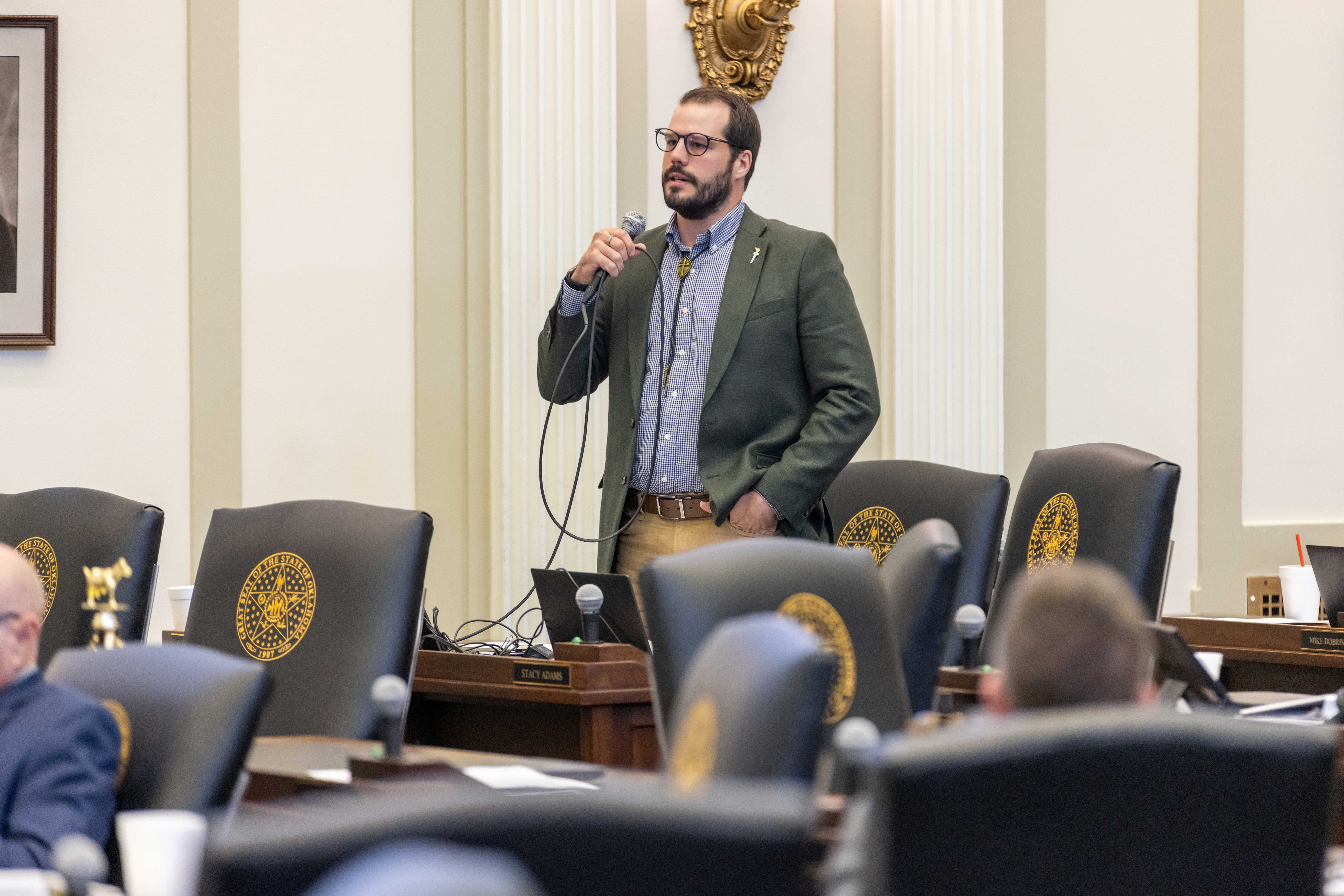
OKLAHOMA CITY — Rep. Gabe Woolley, R-Broken Arrow, has filed House Joint Resolution 1037, a proposed constitutional amendment aimed at increasing public accountability and oversight of Oklahoma’s publicly funded colleges and universities.
HJR1037 would give lawmakers limited authority to temporarily freeze, suspend or withhold state-appropriated funding from institutions within the State System of Higher Education through a joint resolution, placing ultimate authority with Oklahoma voters.
"This measure, if passed, would allow the people of Oklahoma to hold our publicly funded universities and colleges accountable," Woolley said. "How tax dollars are utilized should always be subject to the will of the people."
Under the proposed amendment, any funding action would apply only to state-appropriated dollars and would not affect tuition, fees or private funds. Any freeze, suspension or withholding of funds would be limited to a maximum of two years, with funding automatically restored at the end of that period unless lawmakers take further action. The Legislature would also have the ability to modify, extend within the allowed timeframe or terminate the action early.
"The practices that take place within our educational institutions have implications that reach every Oklahoman when graduates enter the workforce, the classroom or the public square," Woolley said. "We must make sure that entities using taxpayer dollars are working in the best interest of the people of Oklahoma."
Woolley said the resolution is intended to strengthen accountability while preserving voter control.
"Our universities and colleges should be grounded in truth, reality and science when it comes to academic content, school climate and culture," he said. "A stronger system of accountability through the people of Oklahoma will help ensure quality education and responsible use of tax dollars."
HJR1037 must be approved by a majority of both the Oklahoma House of Representatives and the Oklahoma State Senate before being placed on a statewide ballot for voter consideration.
The resolution is eligible to be heard beginning Feb. 2, when the Second Regular Session of the 60th Oklahoma Legislature convenes.
