Lowe Files Comprehensive Package of Education Bills
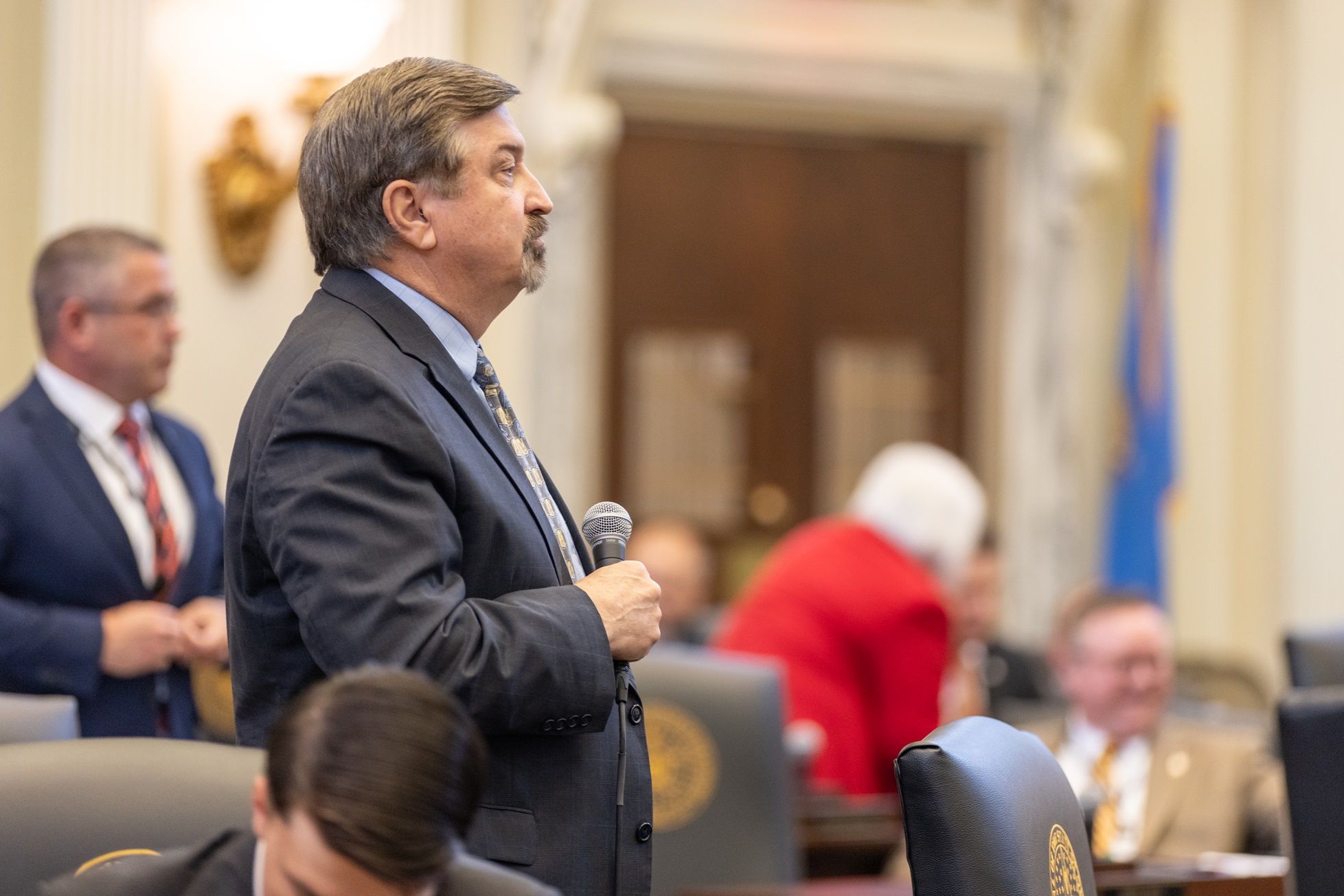
Rep. Dick Lowe, R-Amber, has filed a slate of education-related legislation aimed at strengthening student outcomes, improving consistency across districts and ensuring schools have the tools and resources they need. Lowe, a former ag teacher, is the chair of the House Common Education Committee.
The bills address graduation requirements, early literacy, teacher qualifications, school funding data, accommodations for military families and improved alignment for students who transfer districts.
"Education policy must be clear, consistent and, most importantly, focused on helping students succeed no matter where they live," Lowe said. "These measures are about providing strong academic foundations, supporting families and teachers, and making sure our schools have access to every necessary resource."
The first of Lowe's bills is House Bill 3021, which would clean up graduation requirements statutes and clarifies the multiple pathways to earning a college-ready or career-ready diploma. The bill would also standardize content and rigor statewide while still allowing local innovation. Additionally, HB3021 would require the Oklahoma Workforce Commission to develop a catalog of jobs that high school graduates are qualified to enter immediately upon graduation, either with no additional training or with on-the-job training.
House Bill 3022 would ensure that core subjects, such as math, reading and language arts, science and social studies, in pre-K through sixth grade are taught by fully certified teachers. It would also require the State Department of Education (SDE) to develop salary guidelines for adjunct teachers.
House Bill 3023 would strengthen literacy interventions by making improvements to the state’s existing Student Literacy Intervention Plan (SLIP) and Individualized Program of Reading Instruction (IRPI) to help students access support quicker. It would also establishes guardrails of when intervention can take place so students don't miss other core subjects. It also moves the state to two testing vendors to create more cohesive, long-term literacy data for students who may move between districts.
Also included in the bill are retention guidelines for first through third grades, which would require a student's Reading Proficiency Team to determine whether a student has met the benchmarks for their grade, with summer programs and additional testing available to avoid retention. The students' five-member team would need to recommend retention for the student prior to a student being held back.
"Literacy remains a major concern for Oklahoma parents, educators and policymakers," Lowe said. "House Bill 3023 might not be exactly the right solution, but now is the time to bring ideas to the table and have thoughtful discussions about how we can all help improve literacy for all students."
Another of Lowe's bills, House Bill 3025, corrects statute related to school funding calculations by restoring language that excluded private donations from general fund carryover calculations but limits the exclusion for one year after the donations are received.
House Bill 3031 would direct SDE, in consultation with higher education and career and technology education, to develop and implement a statewide course number system to be used by public schools at the secondary level. This would help align coursework across districts and allow students to transition more smoothly when transferring.
Lowe also filed legislation related to free and reduced lunches for students. House Bill 3032 would require families to either complete the free and reduced-price lunch form or formally opt out as part of enrollment.
"House Bill 3032 is about making sure our schools aren’t leaving resources on the table simply because a form wasn’t completed," Lowe said. "This bill respects families’ right to opt out, but it requires an active choice so schools have accurate information to qualify for federal funding, grants or additional state dollars tied to student need. This is a small way we can provide schools with every dollar they are eligible for to support students and local classrooms."
House Bill 3033 would address funding challenges for schools that are off the state funding formula following the 2023 teacher pay raise. While these schools remain obligated to maintain increased teacher salaries, they no longer receive the associated state funding. The bill seeks to address that gap and support continued fair compensation for teachers.
"House Bill 3033 addresses a funding gap that followed the 2022 teacher pay raise," Lowe said. "Schools that are off the state funding formula rightly increased teacher salaries, but they only received short-term assistance to cover those increases. This bill is about making sure those schools can continue paying these increases without being penalized for their funding status."
Lowe said he will continue work on several education measures from the previous legislative session, adding that Oklahoma's education system should strive to be ever-improving. The measures focus on providing support and resources to students throughout their education, providing clarity to existing law on district transfers and collecting quality data for informed decision-making.
"These bills reflect years' worth of conversations with educators, parents and community leaders," Lowe said. "My goal is to build thoughtful, practical policy that strengthens Oklahoma's education system and better prepare students for life after graduation while providing consistent, reliable support for our teachers."
