Jenkins Files Bills for Voters to Decide Legislative Pay
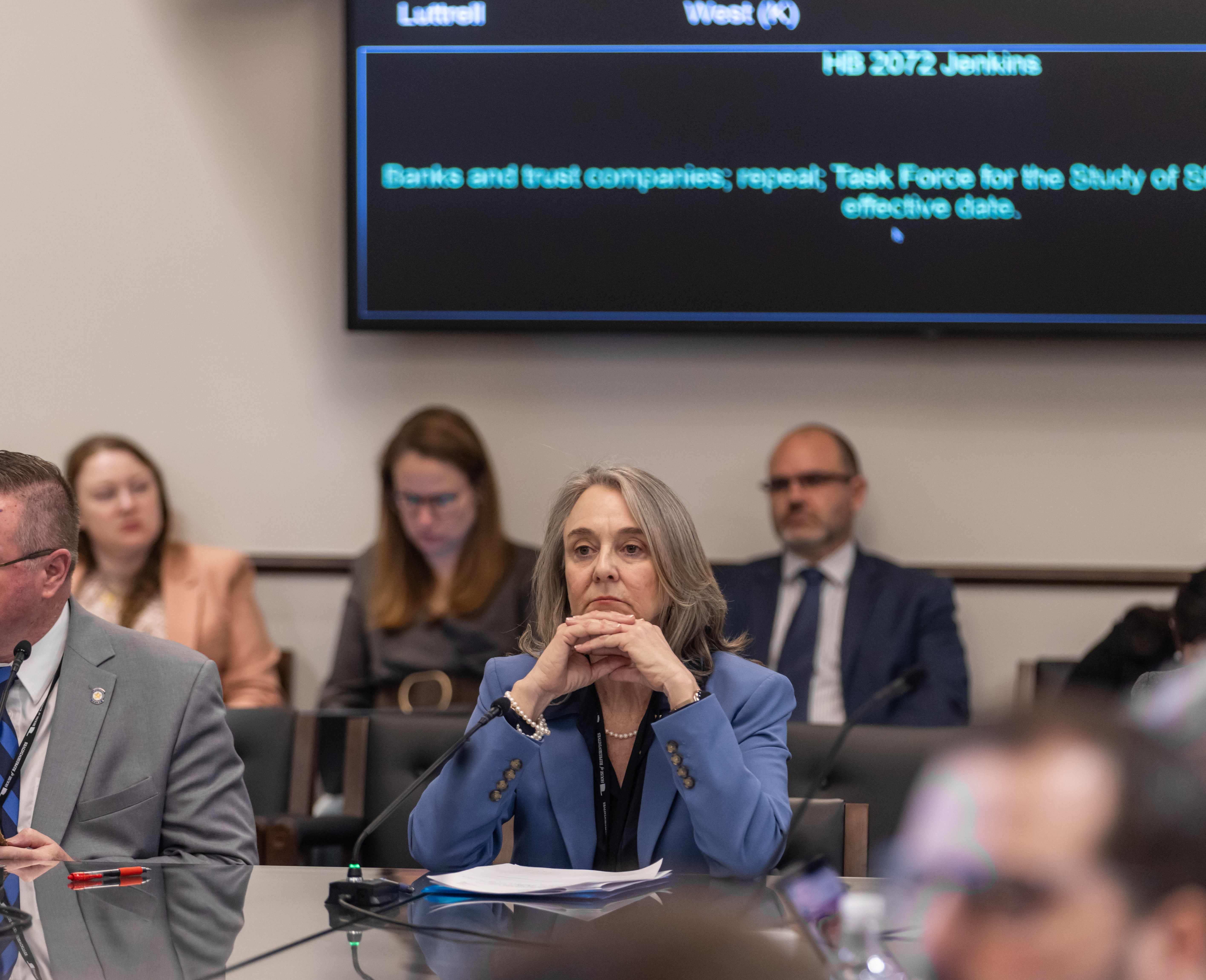
OKLAHOMA CITY — Rep. Molly Jenkins, R-Coyle, has filed three bills she says are aimed at giving voters a direct voice in decisions about pay raises for legislators and statewide elected officials.
Jenkins said she introduced the three pieces of legislation after the Oklahoma Legislative Compensation Board met in executive session late last year before approving recent pay raises for legislators and statewide elected officials.
"I have stood by my word and have chosen to take decisive action after the deeply troubling actions by the Oklahoma Legislative Compensation Board," Jenkins said. "I do not believe the current law was designed to allow this type of closed-door meeting."
House Joint Resolution 1047 would allow voters to approve or reject the recently approved raises for legislators and public officials. The measure would also freeze legislative pay at the Nov. 1, 2025, level unless voters approve any future increases.
House Bill 3093 would amend the Open Meeting Act by clarifying the limited circumstances under which public bodies may meet in executive session. The bill specifies that executive sessions would only be used to discuss individual officers or employees who are, were or will be under the direct supervision, employment or appointment of the public body holding the session.
Jenkins said the change is intended to prevent the compensation board from meeting in executive session to discuss salaries for legislators and statewide elected officials.
"This clarification makes it clear that executive sessions are not a loophole for boards to shield broad compensation decisions from public view," Jenkins said. "The compensation board should not be allowed to meet behind closed doors to decide the pay of officials who are not its employees."
House Bill 3092, titled the Stop the Salary Spike Act, would nullify the raises recently approved by the board for legislators and statewide elected officials and restore salaries to the amounts in effect on Nov. 1, 2025.
Last month, Jenkins sent a formal letter to Attorney General Gentner Drummond requesting an opinion on whether the board violated Oklahoma’s Open Meeting Act by entering executive session before voting on the raises.
"Under state law, executive sessions are permitted only for limited purposes, including discussion of employees’ salaries, but legislators and statewide officials are not employees of the board," Jenkins said. "I hope the attorney general will agree and reverse their unfortunate actions, but I also believe it is important for the Legislature to do its part and leave no doubt."
The Oklahoma Legislative Compensation Board is a constitutionally created body with exclusive authority to set legislative pay. Every two years, the board reviews legislative compensation, and any change takes effect following the next general election.
"For decades, Oklahoma has ranked among the highest-paying part-time legislatures in the nation, yet it routinely trails other states in key performance indicators including infrastructure, education outcomes, public health, and economic mobility," Jenkins said. "In Oklahoma, it is clear that legislative pay has a reverse correlation with government performance. When compensation keeps rising, but results keep falling, it tells you something is broken. Public service has to be about service, not self-reward."
Jenkins also stated that she will not accept the raise if it takes effect and plans to donate the funds to a House District 33 crisis-pregnancy clinic.
"If this raise takes effect, I will not keep it," Jenkins said. "Every dollar will be donated to a House District 33 crisis-pregnancy clinic, organizations that actually serve people in their moment of greatest need."
HJR1047, HB3093 and HB3092 are eligible for consideration in the Second Regular Session of the 60th Legislature, which convenes Feb. 2.
