Archer Bill Could Attract National Laboratory; House Energy Chair Pushes State to 'Think Bigger'
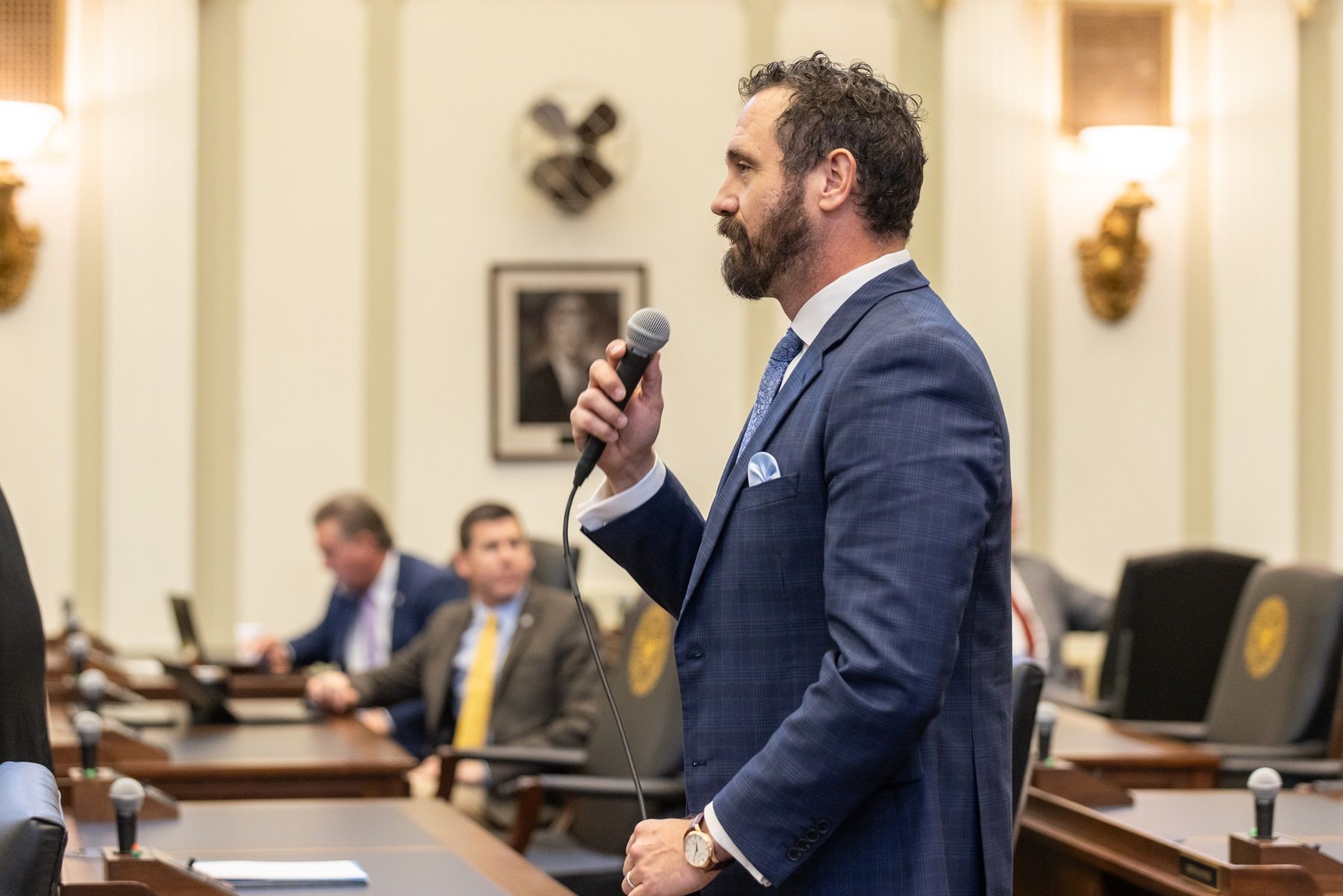
Rep. Nick Archer, R-Elk City, has introduced legislation establishing a statewide effort designed to position Oklahoma to compete for a U.S. national laboratory and other major federal research centers.
If passed into law, House Bill 3176 would establish the Oklahoma Gas, Artificial Intelligence, and Space Research Hub (GAS Hub) to serve as a central coordinating entity, connecting state agencies, higher education and industry partners. The legislation is designed to create organizational readiness rather than initiate a specific project, establishing a disciplined framework for federal engagement, site evaluation, workforce alignment and long-term competitiveness. The GAS Hub would be located within the Department of Commerce.
Archer said the focus is to attract long-term research investment and support advanced workforce development across the state. The GAS Hub could lead to new high-paying technical jobs, expanded opportunities for CareerTech graduates and university researchers, and economic growth in both rural and urban communities.
"Great opportunities don’t wait for states to catch up," Archer said. "We have the talent and resources available, but we need Oklahoma to be in position when the starting gun goes off, so we don't miss our chance. By laying the groundwork now, we can make sure we're organized and truly competitive when the time comes to seize the next opportunity."
Archer emphasized that national laboratories function as long-term economic engines, generating sustained federal research investment and compounded private-sector activity over decades. For example, Oak Ridge National Laboratory contributes more than $7 billion annually to Tennessee’s economy, with similar long-term economic impact seen in states such as New Mexico.
Archer, who chairs the House Energy Committee, pointed out that energy and aerospace, the state's two largest advanced industries, intersect directly with national security and supply chain networks, which he said would make Oklahoma a prime site selection for future national laboratories if there was an established framework.
"When you look at the national lab system, nearly every energy sector is represented, except oil and gas," he said. "We're at a time when energy security, space technology and computing power are vital to our national defense and global competitiveness. If we're ready when the time comes, Oklahoma could have a once-in-a-generation economic opportunity."
Archer also pointed to a recent economic analysis showing that Oklahoma has lost ground in advanced industries relative to peer states, a trend he said underscores the need for a more coordinated, long-term strategy of attracting IP and development capital.
"This is not a failure of effort. It’s a signal that our model needs to change," Archer said. "The GAS Hub is how we start making that change."
The bill also creates the Oklahoma National Laboratory Development Program, which would identify and prepare sites by aligning workforce pipelines and assembling the infrastructure and incentives needed to attract federal investment, such as the U.S. Dept. of Energy, NASA, and the U.S. Dept. of War.
With federal research priorities evolving and Oklahoma’s congressional delegation in key leadership roles, Archer said the timing is right to begin building the framework now.
"House Bill 3176 is ambitious, and it may be hard, but the things worth doing usually are," Archer said. "When Oklahoma puts the right framework in place whether in aerospace, logistics or major national events, opportunity follows. This bill is about building the foundation for the next generation of opportunity."
HB3176 would require annual reporting to state leadership to ensure transparency and accountability as the program moves forward. If enacted, the measure would take effect Nov. 1, 2026.
