Moore Education Bills Seek to Boost Student Success and Grant Greater Access to Higher Learning
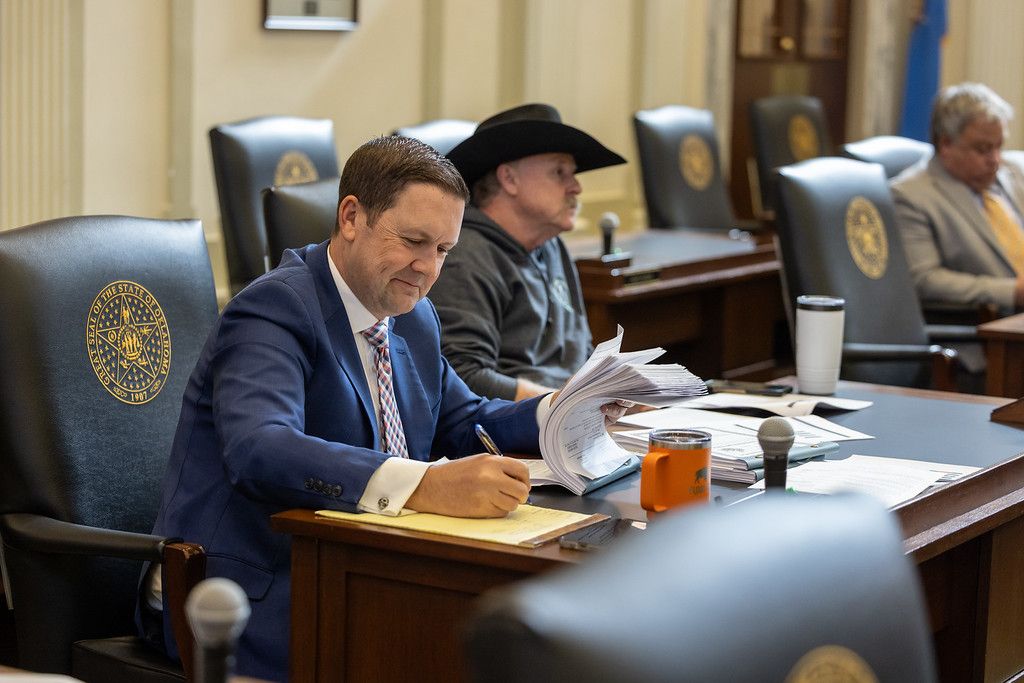
OKLAHOMA CITY – House Speaker Pro Tempore Anthony Moore, R-Clinton, has filed a trio of bills to improve education outcomes for Oklahoma students and to provide greater access to higher learning.
House Bill 4358 would require public schools, starting with the 2026-27 school year, to limit to one hour per school day electronic screen time for students in prekindergarten through fifth grade across all subject areas.
"Study after study shows that limiting screen time for young children results in better brain function and focus, more creativity, better sleep and so much more – all of which lead to better learning outcomes for our kids," Moore said. "Oklahoma children deserve face-to-face time with their teachers and peers, not instruction through an electronic device.
House Bill 4359 would require state academic assessments in public elementary and secondary schools to be held during the month May each year beginning with next school year.
"When academic assessments are held too early, students can miss up to a month of additional learning," Moore said. "If state tests are held in April, for example, students might spend the month of May watching movies or only half-heartedly reviewing lessons on which they know they won't be tested. Changing this schedule means our students have more time to prepare for end-of-year tests, and the test results themselves are more accurate and have greater meaning."
HB4326 would expand access to the Oklahoma Higher Learning Access Program, known as Oklahoma's Promise scholarship, to students of public K-12 school counselors, librarians, school nurses or athletic trainers and those who teach at CareerTechs.
This builds on legislation Moore passed last year, House Bill 1727, that extended the scholarship to children of all educators who are considered in statute as full-time certified teachers who have taught for at least 10 years in Oklahoma public schools. That became effective July 1.
"The goal is to ensure more students can go to college," Moore said. "Data is clear that college graduates earn more than high school graduates. That benefits the students and society as a whole. This also serves as an added benefit for those who work directly with students in our public schools."
HB 4386 clarifies that a certified teacher includes any full-time classroom teacher who is standard or alternatively certified by the State Board of Education and who teaches a classroom subject as determined by the State Regents. The bill also adds that a certified teacher shall be considered the parent of a student if the teacher is the natural or adoptive parent or the permanent legal guardian of the student. Children of emergency or provisionally certified teachers would not automatically qualify for the scholarship, only if they otherwise meet financial need and other eligibility requirements.
The measure also would extend the scholarship to qualifying students seeking admission to CareerTech and to students that were in the custody of the state or a federally recognized Indian tribe.
It would raise from 17 to 18 the age of a student in public or private school who may apply for the scholarship beginning in the eighth grade through Dec. 31 of their senior year. Students educated by other means may apply from the age of 13 until they reach 18.
These measures are eligible for consideration during the Second Regular Session of the 60th Legislature, which convened Feb. 2.
