Common Cents Act takes on penny problems, advances in House
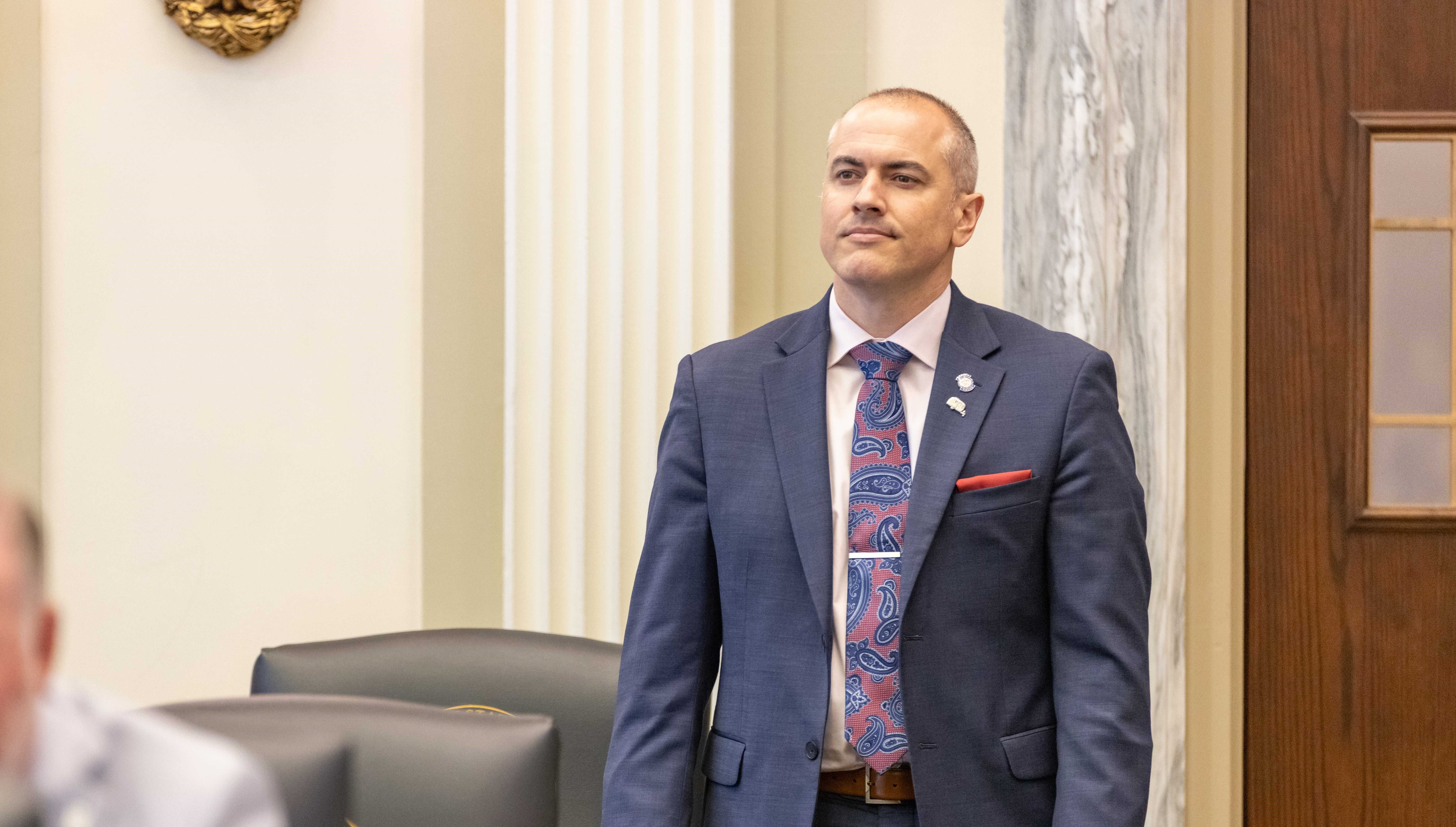
OKLAHOMA CITY — Legislation that would allow and later require certain public cash transactions to be rounded to the nearest nickel has passed a House policy committee and now moves to an oversight committee.
Authored by Rep. Derrick Hildebrant, R-Catoosa, House Bill 3075, formally titled the Oklahoma Common Cents Act, would not apply to the private sector and would apply only to public payments made in cash or the portion paid in cash. The measure does not apply to checks, debit cards, credit cards, electronic payments or other digital transactions.
"This is a simple, practical bill that modernizes how we handle cash payments without impacting anyone who pays digitally," Hildebrant said. "HB3075 is limited to public cash transactions only. If you’re paying online or with a card, nothing changes."
Under HB3075, final cash amounts owed to a political subdivision would be rounded to the nearest nickel. Amounts ending in $0.01 or $0.02 would be rounded down to $0.00, amounts ending in $0.03 or $0.04 would be rounded up to $0.05, amounts ending in $0.06 or $0.07 would be rounded down to $0.05, and amounts ending in $0.08 or $0.09 would be rounded up to $0.10.
Hildebrant says the bill was requested by one of his constituents, who is also the Rogers County Treasurer, Jason Carini.
"The Rogers County penny analysis showed the rounding approach is essentially neutral overall, and in some years, it resulted in a slight net gain," Hildebrant said.
Rogers County analyzed cash transaction data across 2023, 2024 and 2025. The analysis found the rounding outcomes would have been minimal over the three-year period. In 2023, the county recorded 1,517 cash transactions, with rounding resulting in an overall net gain of $0.21. In 2024, there were 1,555 cash transactions, with an overall net gain of $0.75. In 2025, the county recorded 1,542 cash transactions, with rounding resulting in an overall net gain of $0.86.
The Oklahoma Common Cents Act mirrors similar legislation currently being considered at the federal level. The federal Common Cents Act would direct the U.S. Secretary of the Treasury to stop minting the penny and would require cash transactions to be rounded up or down to the nearest five cents.
Under the measure, from the effective date of the bill through July 1, 2027, political subdivisions could choose to implement the rounding system. Beginning July 1, 2027, rounding would become mandatory for applicable cash transactions unless directed otherwise by Congress.
The bill also outlines accounting provisions for ad valorem tax payments and authorizes political subdivisions to determine how overages or shortages are managed within funds under their control.
HB3075 passed unanimously out of the House General Government Subcommittee by a 9-0 vote and will next be considered by the Government Oversight Committee.
