Turner Studies Child-Sensitive Arrest Policies and Practices in Oklahoma
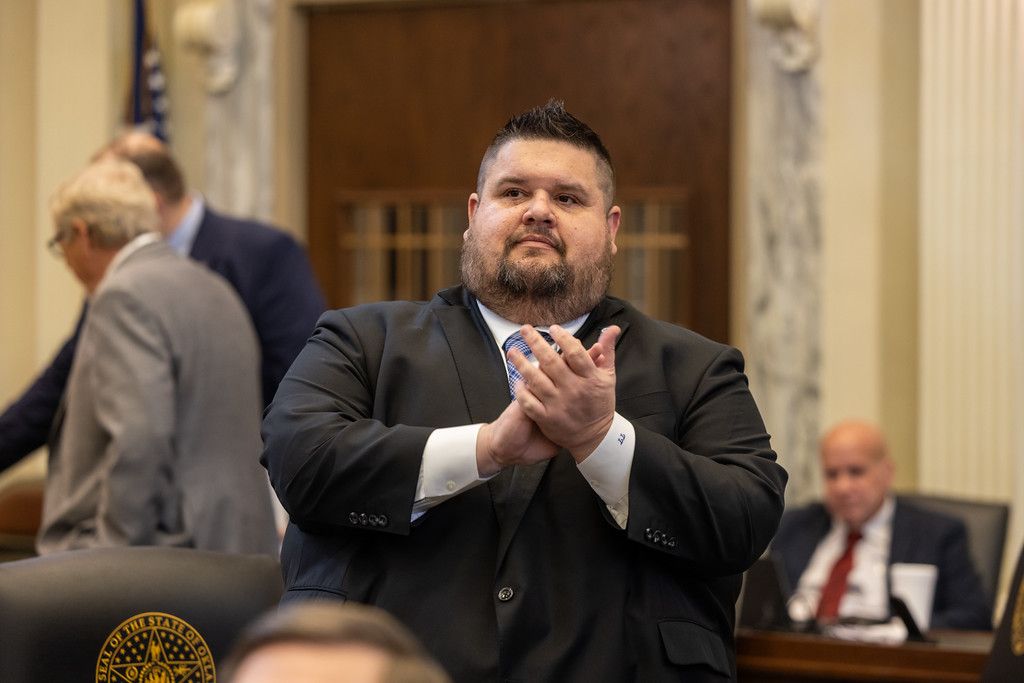
OKLAHOMA CITY –The House Criminal Judiciary Committee on Tuesday held an interim study by Rep. Tim Turner, R-Kinta, examining child-sensitive policies and practices when children are present during the arrest of a parent or caregiver.
Turner, who served more than two decades in law enforcement, including as a sheriff and narcotics officer, said the intent of the study was to examine current Oklahoma law enforcement policies, practices, training and data collection efforts while identifying practical opportunities to strengthen officer training, cross-system collaboration, and available resources that support public safety and improve outcomes for children and families.
"Law enforcement officers are asked to make difficult decisions in rapidly evolving situations where officer and public safety must always remain the highest priority," Turner said. "The purpose of this discussion is not to change that mission. Officers must maintain the ability to do their jobs. But we also must consider children who are present when an arrest takes place and the impact that may have on them."
Turner said it was his intent during the study to learn how many Oklahoma children are affected by parental arrest in their presence; what procedures and resources are in place and available to help officers and affected children; what happens to those children after an arrest to make sure they are safe and supported; and ways to make this process better and safer so children are protected while not compromising law enforcement officers and public safety.
The study was requested by the Oklahoma Commission on Children and Youth (OCCY), through its legislatively mandated Children of Incarcerated Parents (CIP) Advisory Committee.
OCCY Executive Director Annette Wisk Jacobi gave an overview of the commission's work to improve services and outcomes for Oklahoma's children, youth and families. She said the commission works across agencies, systems and communities to identify and address issues affecting children and youth and to promote programs that support them.
"Our role often places OCCY at the intersection of multiple systems, including child welfare, behavioral health, education and the justice system," Jacobi said.
Dr. David McLeod, chair of OCCY's CIP Advisory Committee and a director at the Anne and Henry Zarrow School of Social Work at the University of Oklahoma, spoke about what children may experience when witnessing an arrest of a parent or caregiver.
They may feel their safety is threatened, he said, or have caregiver separation anxiety. They'll likely be confused about what happens next. This can create acute or toxic stress and trauma responses. This can later result in emotional and behavioral difficulty, negative family and police perceptions, posttraumatic stress symptoms, physiological stress and can impact school performance and development.
McLeod said law enforcement and lawmakers should consider what is preventable, what is already feasible and what data Oklahoma lacks. Some protective factors to consider include having a trusted adult in place to help the child, giving clear information about what is happening now and what will happen next, having a safe caregiver in place who will help the child maintain school and other routine activities, offering follow-up support.
Shannon Luper, program director of Girl Scouts Beyond Bars and Girl Scouts of Eastern Oklahoma, shared that more than 26,000 Oklahoma children have a parent in prison, and one in 10 have experienced incarceration of a family member. For many children, a parent's arrest is their first interaction with the justice system.
"The question is not only what happens to the parent. It is what happens to the child," she said. "Parental arrest is not a single event for the child. It's a journey."
Luper included the perspective shared by youth when they were asked what they remembered about the experience of a parent or caregiver being arrested, what helped them, what could have been different and what they would like policymakers to understand.
Child-sensitive arrests are just the beginning of the conversation, Luper said. What organizations such as hers do after an arrest is equally if not more important. This may include making sure the child can visit their incarcerated parent to help maintain healthy family relationships, partnering with caregivers to provide support, mentoring the child, teaching leadership and resilience, and supporting the parent with education and opportunities to reconnect with their children.
Other presenters who shared lived experiences included Mikayla Woods, a Haskell County resident; and Daryll Savell on the Parent Partnership Board with OCCY.
The study also featured a question-and-answer session with law enforcement, featuring Scott Walton, sheriff of Rogers County; Jon Sappington, former Rogers County undersheriff; and Kevin Branscum, an investigator with the District 25 district attorney's office.
This study can be viewed on the House website, https://www.okhouse.gov/, under live proceedings. Search by calendar day, Sept. 22, then for study IS26-082 Child-Sensitive Arrest Policies and Practices in Oklahoma, under Criminal Judiciary starting at 1 p.m.
