Lepak Study Examines Taxation of Digital Services
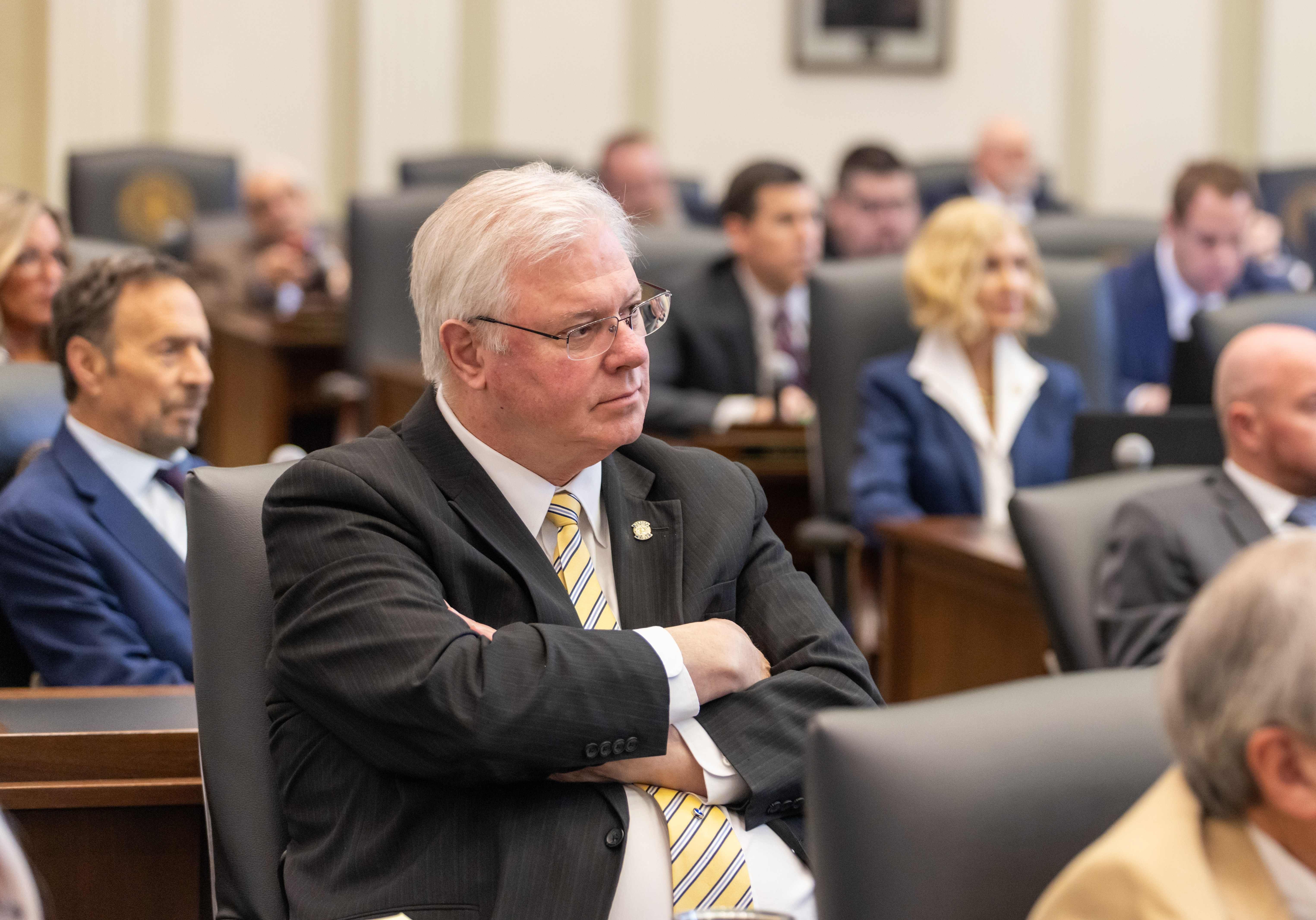
OKLAHOMA CITY – Rep. Mark Lepak, R-Claremore, hosted an interim study examining how Oklahoma taxes Software as a Service, digital memberships and whether Oklahoma's tax code should be updated to reflect the growing shift toward digital products and services, including software subscriptions, music, audiobooks and streaming services.
Interim Study 26-068, titled Software as a Service (SaaS) and Digital Memberships, considered the potential impact of taxing such products on state and local revenue, and also reviewed approaches taken by other states.
"Many who'd like to eliminate the state income tax are cautious and ask a question. 'How do you replace the revenue those taxes fund?'," Lepak stated when he began the meeting. "It's fair question with layers of answers that we seem debated during the current election cycle. This study does not attempt to address that question, although one answer is to transition to more of a consumption-based tax system. This study is narrowly focused on taxing one set of services, software as a service and digital services. But I would add, this policy shift deserves consideration, even if decoupled from the idea of eliminating the income tax."
Lepak said Oklahoma's economy has changed significantly while the state's tax structure has largely remained rooted in an economy built around the sale of tangible goods.
"We have a 21st-century economy we're living in that has a tax structure from 100 years ago. Perhaps we should consider making some changes to better align the reality of an economy to the day we're living in," Lepak said.
The Oklahoma Municipal League requested the study to examine how changing consumer spending habits could affect local revenue. Dave Andren, director of research for the league, discussed municipalities’ reliance on sales and use taxes as consumers increasingly spend money on digital and subscription-based services.
"The economy has changed, but our policy has not," Andren stated. "Oklahoma's sales tax was built around those physical retail, tangible goods and as we have those local storefronts. They have shifted over into what's called the SaaS model, and that's Software as a Service. We are no longer going and we're no longer purchasing those tangible goods from the store. We're now paying for subscription-based services, online, and in the current statutes of Oklahoma, those subscriptions are no longer taxed and because of that we are losing revenue."
Andren pointed to several examples of the shift, including consumers moving from purchasing CDs to using music streaming services, from DVDs to video streaming platforms and from boxed computer software to cloud-based programs.
"Now everything is cloud based, digital services. This is where we are," Andren said. "We have gone from a tangible society into a digital society, and we need to move forward."
Andren said sales and use taxes account for 68% of local government budgets in Oklahoma, making changes in consumer spending particularly significant for municipalities.
"We are ranked number one in the reliance on sales tax in the nation," Andren said. "The next highest sales tax reliance is 50% and that's the state of Alabama. So, when you look at a pie chart and you see how municipalities are funded, sales tax is the largest chunk by far. Cities still have to fund public services like police, fire streets, water parks."
The study also examined South Dakota’s approach, which applies sales tax to certain digital products and vendor-hosted software.
Corey Jager, tax policy manager with the Oklahoma Tax Commission, discussed how Oklahoma could administer a tax on digital products if lawmakers chose to pursue legislation.
Jager said lawmakers first would need to clearly define which products would be taxable. Potential categories discussed included digital audio and visual products, streaming and television services, digital books and audiobooks, video games, periodicals, information services and software. Lawmakers also would need to determine applicable exemptions and establish sourcing rules to determine where sales tax revenue is collected.
Lawmakers would also need to establish sourcing rules, such as those outlined in the Streamlined Sales and Use Tax Agreement, of which Oklahoma is already a member. Under these rules, sales tax on a digital product would generally be based on where the purchaser receives the product. This means the tax revenue would be directed to the purchaser's location rather than the location of the business selling the product.
Jager also emphasized that after legislation is passed, the need to give the Tax Commission sufficient time to develop administrative rules and educate businesses and taxpayers before any new tax requirements take effect.
"I will say 30 days is not enough time to get emergency rules in place and so just a consideration for the legislature. If you're going to make this change, we would like a little bit more time," Jager stated. "We also try to provide vendors and taxpayers with guidance, so they know how to follow the law, and they know how to report and collect sales tax appropriately. There's also the other pieces, the taxpayer and the vendor piece."
The Tax Commission estimated taxing digital products could generate approximately $40 million annually in additional state sales tax revenue.
"The main things to consider are defining is exactly what you want to tax and putting that into statute, applying our streamline definitions and sourcing rules to maintain compliance, maintain a user-friendly atmosphere for the businesses that sell to Oklahoma," Jager said. "Allow lead time for rules registration and system changes and then potentially see a revenue generated to the state of about $40 million."
After the presentations concluded, the discussion broadened to Oklahoma's overall tax structure and whether comprehensive tax reform would be more effective than making individual changes to the tax code.
The study can be viewed on the House website, https://www.okhouse.gov/, under live proceedings. Search by calendar day, Sept. 28, then for study IS 26-068 Software as a Service and Digital Memberships starting at 9 am.
