Active Shooter Response Training Studied in House
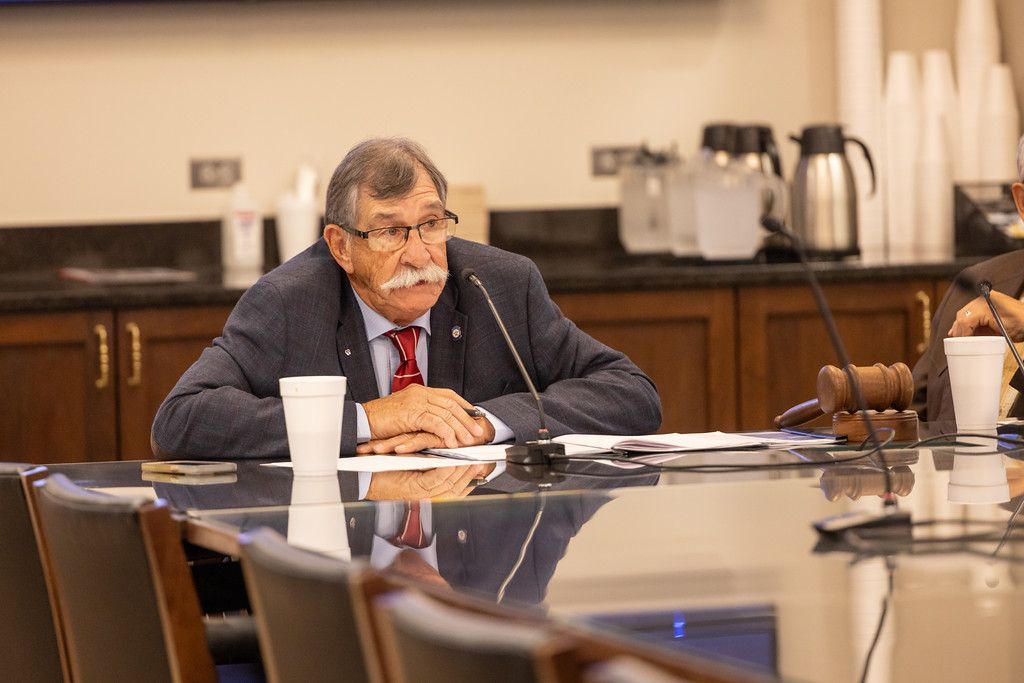
OKLAHOMA CITY - Rep. Rick West, R-Heavener, on Wednesday held an interim study before the House Public Safety Committee examining active shooter response training for law enforcement professionals.
"Active shooter situations in schools and the public are of huge concern to everyone," West said.
"We Can't say we hope they never happens. Too many have already happened. This study is about making sure law enforcement knows what training is currently available in the state so they are prepared to respond and where gaps might exist that we need to address."
West invited multiple presenters to discuss active shooter situations that have occurred across the country and various law enforcement responses.
Colton Jones with the Black Banner Group helped organize the study and was the first speaker.
He said every state is different in approaching active shooter incidences. He specifically examined various responses to mass shootings at schools, including Columbine High School in Colorado, Virginia Tech, Sandy Hook Elementary School in Connecticut and at Robb Elementary School in Uvalde, Texas.
Jones noted the difference in response times in these incidences, with Sandy Hook being within 11 minutes and Uvalde being up to 77 minutes before law enforcement breached the school. Training and coordination made the difference, he said.
"At Sandy Hook you saw officers show up and proceed to the threat," Jones said, "Where when you get to Uvalde, you had officers show up where it seemed like they were afraid to go to the threat, because of, a lot of them said, lack of training."
Jones, an Army veteran said recurring training matters. "In the Army it was always train, train, train, train, train. That way, when you had to act upon that training, it was there and you knew it like the back of your hand."
Jones said a lack of finances and manpower prevent many rural law enforcement departments from sending officers to training.
Tanner Killiingsworth, a student resource officer from Latimer County, said continuing education and advanced training are essential. But differences in professional development, training methods, terminology and response procedures can actually hinder responses, creating significant communication and coordination challenges when officers from multiple agencies respond to the same incident.
"In a situation where time is critical, inconsistent training and conflicting tactics can lead to confusion, delayed responses and unnecessary risk to officers and innocent civilians," Killingsworth said.
Establishing standardized training is essential, he said.
Oklahoma Commissioner of Public Safety and Homeland Security Advisor Tim Tipton discussed his department's training availability and the ability of law enforcement departments to access training when needed. He said this is one of the top three safety concerns his department is dedicated to in the state.
Tipton spoke on the Secure Oklahoma Schools, or SOS, initiative and the Oklahoma School Security Institute (OSSI), which focuses not just on responding to shooters but to prevention.
"You know, school safety, active shooter threat response, although a ton of it is about the response when the bad guy's in the building, but school safety has to be multi-layered, and the first point of that is prevention," Tipton said. "We don't want the bad guy even getting to the building."
The Legislature dedicated funding for schools to do risk and vulnerability assessments every five years. Tipton said all schools have now had those and now OSSI is in the process of updating those so the schools can qualify for this funding going forward.
Mike Fike, director of OSSI, also spoke about the effectiveness of training for officers and why recurring training is essential.
Other presenters included Bobby Floyd, director of training, Austin Slaten, academy coordinator, and Clay Anderson, an instructor, at the Council on Law Enforcement Education and Training (CLEET). They outlined the types and duration of active shooter response training and the Center for Active Shooter Preparedness (CASP) at CLEET and its role in active shooter training across the state.
Brett Macy, deputy director of the Transportation Division at the Oklahoma Corporation Commission, shared about the coordination between rural and municipal departments during active shooter situations and access to recurring training.
