Lawmakers Consider Economic Impact of Driver's License Suspensions
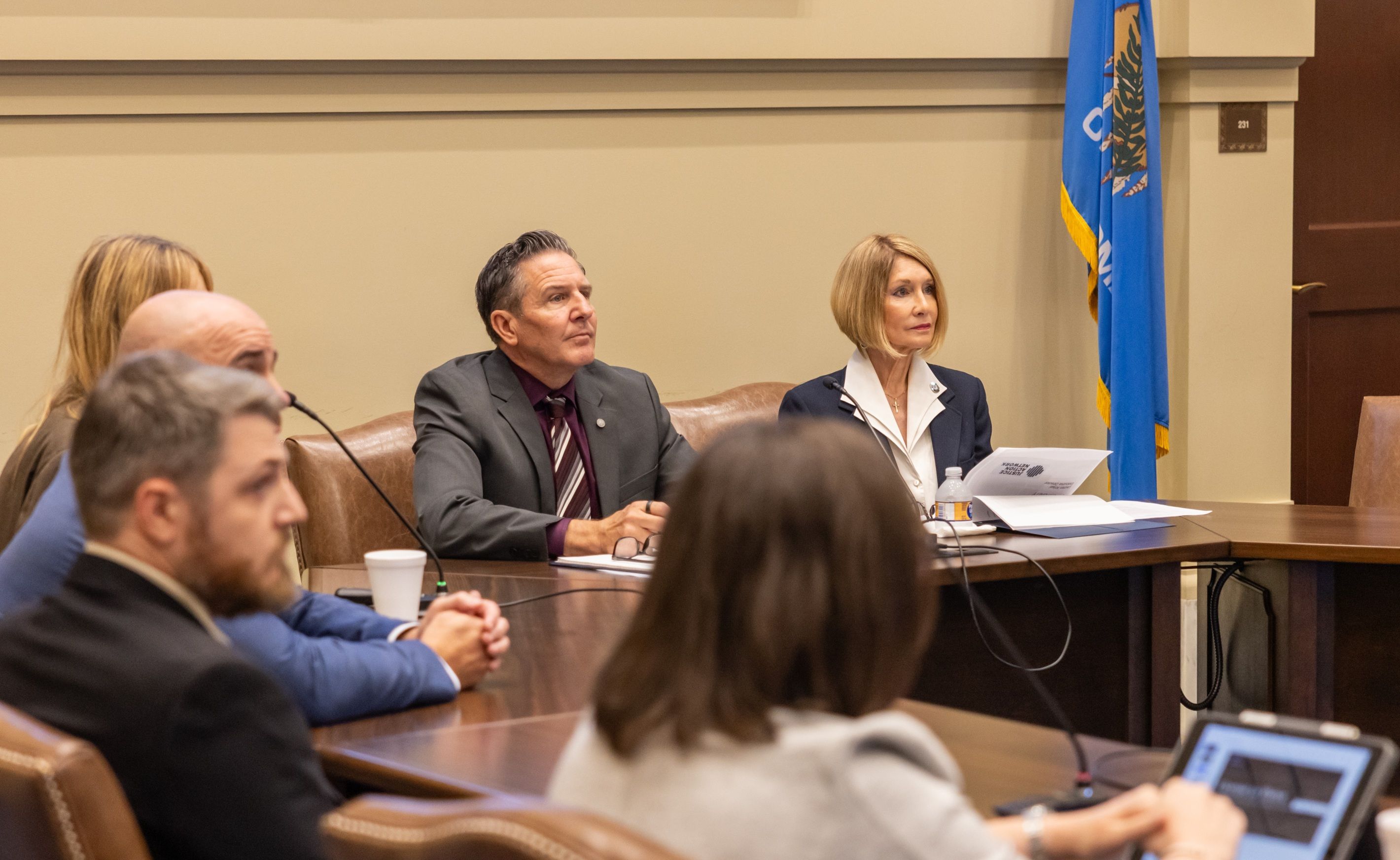
Rep. Tammy West, R-Oklahoma City, and Sen. Todd Gollihare, R-Sapulpa, considered Tuesday the current driver's license suspension policies within the state and the resulting economic impact on the workforce and families.
"We want processes to work well for people who want to do the right thing and are striving to do the right thing," West said. "We do not want unnecessary barriers, and for those who are not striving to do the right thing, we want the consequences to be fair and administered properly."
"As a former chief U.S. probation officer for Oklahoma’s Northern District, I saw firsthand how suspending driver’s licenses for missed court dates or unpaid fees can put people in a no-win situation," Gollihare said. "A suspended license disrupts their ability to work and support their families, and these policies can unintentionally push more people toward public assistance programs. This was an important conversation on a complex issue, and I look forward to working with Representative West and stakeholders to find a balanced solution."
Lauren Krisai, executive director of Justice Action Network, shared that licenses may be suspended for many reasons, including failure to pay, failure to appear and financial responsibility. Licenses may also be suspended for driving offenses such as DUIs, though that was not the focus of Tuesday's study.
"There are a lot of hidden economic costs of suspending a license," Krisai said, adding that it prohibits people from legally driving to work, school and the grocery store. She later added that the ripple effect also affects employers and manufacturers if an employee can't get to work.
Jeremy Hutchinson, director of strategic initiatives for Unify.us, asked the committee, "What kind of policy is that that we impose a sanction a punishment and then beg please ignore this and go to work and take your kids to school and try to be a responsible member of society?"
Krisai highlighted House Bill 29 in Ohio, which retroactively eliminated suspensions for failure to pay traffic tickets. The bill, which was supported by the Ohio Manufacturers' Association, Ohio Association of Municipal/County Court Clerks, and numerous county chambers and local businesses, allowed over 7,000 people to fully regain their legal driving status.
Michael Olson, policy counsel for Oklahomans for Criminal Justice Reform, said if 180,000 people with suspended licenses stopped driving, Oklahoma's workforce would reduce by nearly 9%. He added that during the 2008 recession, Oklahoma's labor force dropped by 2%, and said a 9% drop would present "a massive problem for the state."
Fines and Fees Justice Center Regional Director Sarah Couture said that the average length for driver's license suspension for failure in Oklahoma to pay is three years and two months.
"Debt-based driver's license suspension costs people their livelihoods, it cuts economic growth, it undermines public safety and it does not compel payment of debts," Couture said. "Ending debt-based license suspension increases employment, increases the tax base and overall GDP, and improves public safety."
Couture estimated a net fiscal tax revenue benefit of over $42 million if Oklahoma passed comprehensive driver's license suspension reform.
"An increased workforce would also logically result in reductions of state expenditures on public benefits like Medicaid, SNAP and other social welfare problems due to increased earnings in populations often affected by driver's license suspensions," she said.
At the conclusion of the study, West thanked speakers and attendees for participating in the conversation.
"We are in a maze that we have created that makes it very difficult for people who are wanting to do the right thing to do the right thing," West said, later adding, "This is something that we can address, and it will help the people of the state of Oklahoma. It will help the businesses of the state of Oklahoma, and it will help change families in this state."
