Dobrinski Studies Biochar Impacts for Oklahoma
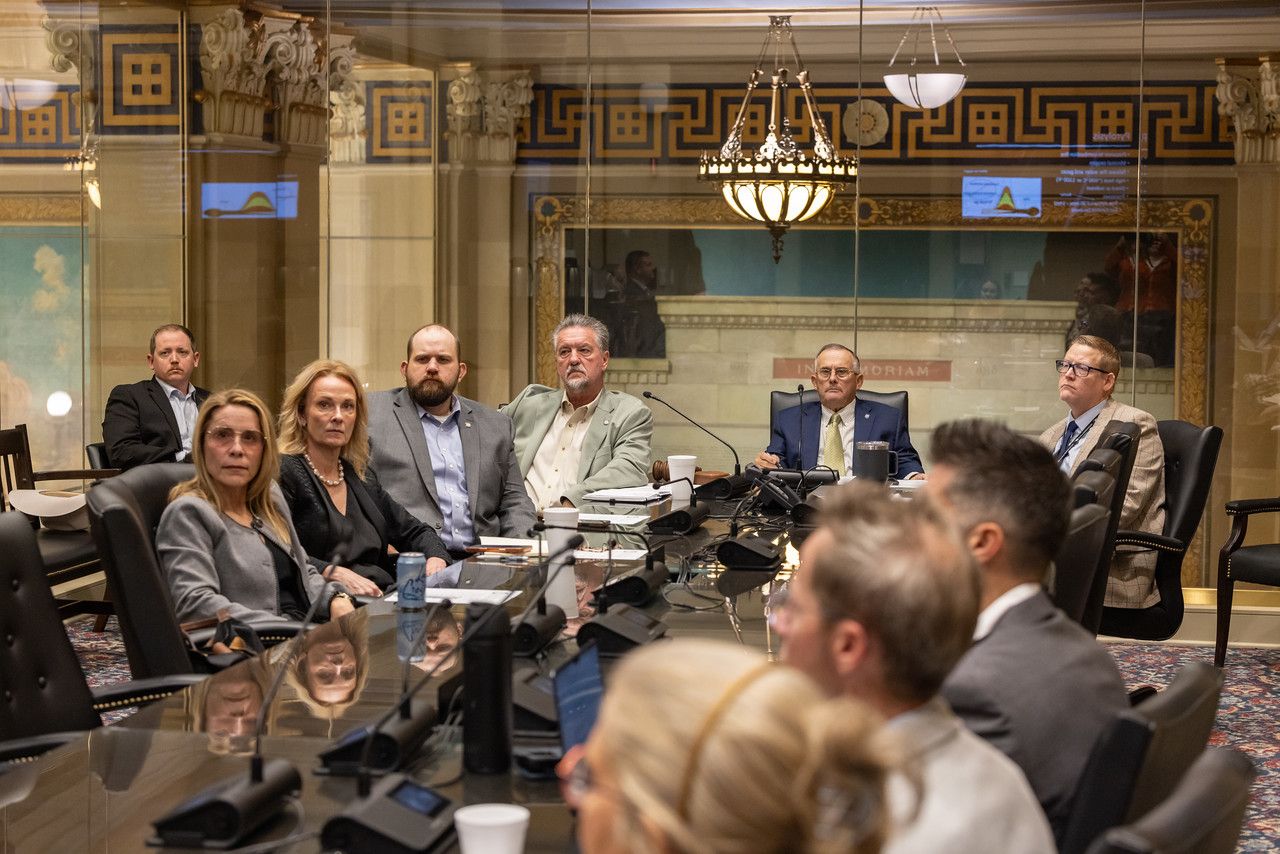
OKLAHOMA CITY – Rep. Mike Dobrinski, R-Okeene, on Tuesday held an interim study before the House Agriculture Committee examining biochar production and its potential applications in Oklahoma.
Study participants first had to learn what biochar is.
Dr. Lori Han, with the School of Civil Engineering and Environmental Science at the University of Oklahoma, explained biochar is a carbon-rich material made from biomass that undergoes a thermochemical conversion process known as pyrolysis. A simpler way to say this is a once living material, exposed to high heat, becomes a material with new properties.
It is not charcoal, she explained. Instead, it comes from agricultural waste such as crop residue, manure and litter or nut shells. It also can come from trees and shrubs and other wood waste. The product then can be used to improve soil health and water retention, among other uses – turning a negative into a positive, Han said.
Dobrinski said he became interested in biochar because of it's promise to transform invasive species, such as eastern red cedars, into something beneficial.
"These trees consume enormous amounts of water and have a great potential of becoming fuel for wildfires in areas that experience frequent drought," Dobrinski said. "This causes public safety and conservation issues. We must remove these threats in order to stop the next devastating wildfire and preserve precious resources such as water. If we can create value and benefit at the same time, we want to learn all we can about that. That's the basis of this study."
Eric Perner, a licensed professional petroleum/mechanical engineer and the chief operating officer at Rebellion Energy Solutions out of Tulsa, spoke of using eastern red cedars to produce biochar for orphan-well plugging, land restoration and regenerative agriculture in Oklahoma.
The benefits of plugging abandoned oil and natural gas wells, Perner said, is mitigating methane gas emissions (super pollutants), protecting groundwater, eliminating public exposure to health and safety risks, increasing property values and allowing for incremental land use.
Perner said he's witnessed the restoration of land and the return of native species, such as butterflies and birds, in places where biochar has been applied. He even suggested that data centers and other large energy consumers potentially could make use of biochar to offset water and energy usage at a minimal cost to taxpayers. He said there is so much opportunity that warrants further pursuit.
Susan Bergen, chief executive officer of Bergen Enterprises and Prairie Dirt Solutions in Norman, discussed her company's industrial biochar production. They convert wood waste headed for landfills into biochar, which then becomes materials for school playgrounds, landscaping mulch or sawdust.
Bergen said the material improves soil function, including aeration, has water-holding capacity, infiltrates and supports organic matter and can be used in crop production and feedstock. She said biochar even has been shown to remove pollutants from water, and the production process creates its own energy.
Matt Chandler, a founder and the CEO of Infinite ECO, detailed opportunities to convert eastern red cedar removal into biochar production, creating additional value from Oklahoma's existing cedar-clearing efforts.
Chandler explained Oklahoma already pays to cut and clear invasive species like eastern red cedars every year. If the state doesn't convert the wood into a usable product, however, we're missing an economic opportunity. The state also buys materials every year when instead it could convert wood and agriculture waste into biochar that could be sold or used near where it is made. Cedar char could pay its own way through product sales and carbon credits, he said.?
The Terry Peach Water Restoration Act, for example, which was updated through House Bill 2988 and goes into effect statewide Nov. 1, already has $5 million appropriated and has removed almost 16,000 acres of red cedars. The federal government spent about $23.6 million in Oklahoma from 2017 to 2024 on brush management. There's also private funding to consider.
The wood from these projects currently is piled, burned or scattered. By turning it into biochar, the state could save or even make money, and could enjoy benefits such as stormwater and erosion control, stabilizing roadbeds, removing pollutants and more, Chandler said.
It's a Dust Bowl-sized problem that will take effort from multiple sources to attack in a way that becomes regenerative going forward, he said, but it is possible.
The study can be viewed on the House website under News & Media, Live Proceedings, then search calendar for 1:30 p.m. Oct. 20 for the specific study.
