Stinson Bill Addressing Blood Clot Awareness Advances to Senate
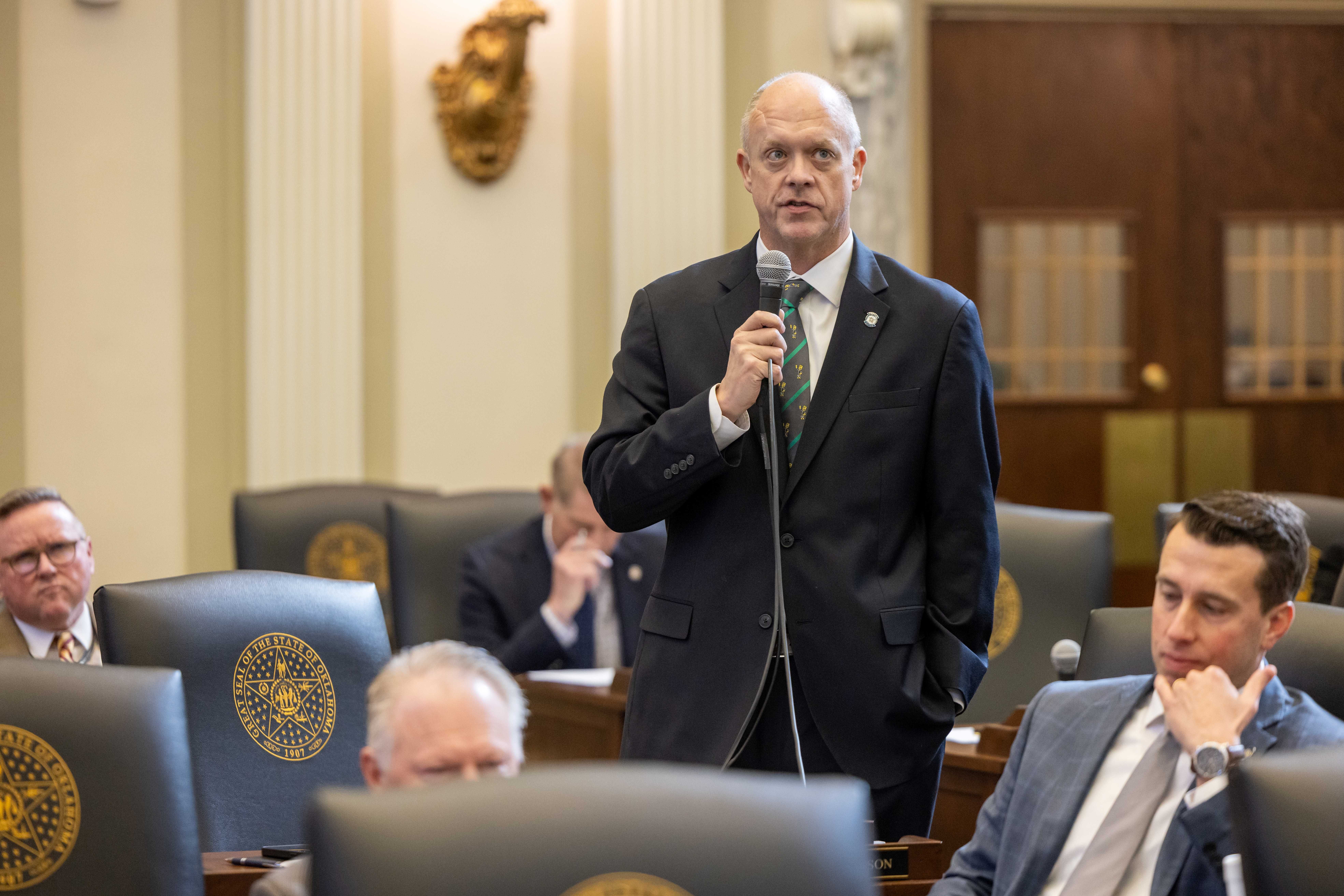
OKLAHOMA CITY- Legislation by Rep. Preston Stinson, R-Edmond, aimed at improving awareness and prevention of dangerous blood clots has passed the Oklahoma House of Representatives and now moves to the Senate for further consideration.
House Bill 3644, titled the Blake Burgess Act, passed the House with a 71-24 vote.
The bill is named in honor of Blake Burgess, a 21-year-old former neighbor and constituent of Stinson who died from a pulmonary embolism in 2020. The bill would require hospitals with emergency departments and ambulatory surgical centers to develop policies and procedures for identifying and responding to patients at risk of venous thromboembolism (VTE). The measure also would require annual training for nonphysician staff on these procedures.
"Blake’s death was a heartbreaking reminder of how quickly and quietly this condition can take a life," Stinson said. "Every six minutes, someone dies from complications of VTE. If we can increase awareness and improve screenings and respond faster, we can save lives like Blake's."
Pulmonary embolism is a type of venous thromboembolism (VTE), a condition caused by blood clots that form in veins and can travel to the lungs. According to the Centers for Disease Control and Prevention, an estimated 60,000 to 100,000 Americans die from VTE each year, and many more experience long-term complications.
The legislation also directs the Oklahoma State Department of Health to contract with the state’s designated health information exchange to create and maintain a statewide VTE registry. The registry would track data and performance measures to help improve patient care, ensure compliance with nationally recognized medical guidelines and monitor outcomes.
Beginning July 1, 2027, hospitals with emergency departments would be required to report certain data to the registry. The Department of Health would submit a report on the incidence of VTE in the state by June 1, 2027.
The bill also adds definitions of pulmonary embolism and venous thromboembolism to the Continuum of Care and Assisted Living Act. Assisted living facilities would be required to provide residents with a consumer information pamphlet about VTE upon admission. The pamphlet would be provided at no cost by the National Blood Clot Alliance.
In addition, the measure would require assisted living facilities to include recognition of VTE symptoms and emergency response techniques as part of their comprehensive resident screening instruments.
Stinson said the legislation is designed to improve education and coordination across the health care system.
"Many people simply don’t know the warning signs of a blood clot until it’s too late. VTE is the leading cause of preventable death in a hospital setting." Stinson said. “This bill helps ensure that both patients and health care providers have the information and systems in place to recognize the risk and respond quickly."
HB3644 now moves to the Senate for further consideration.
