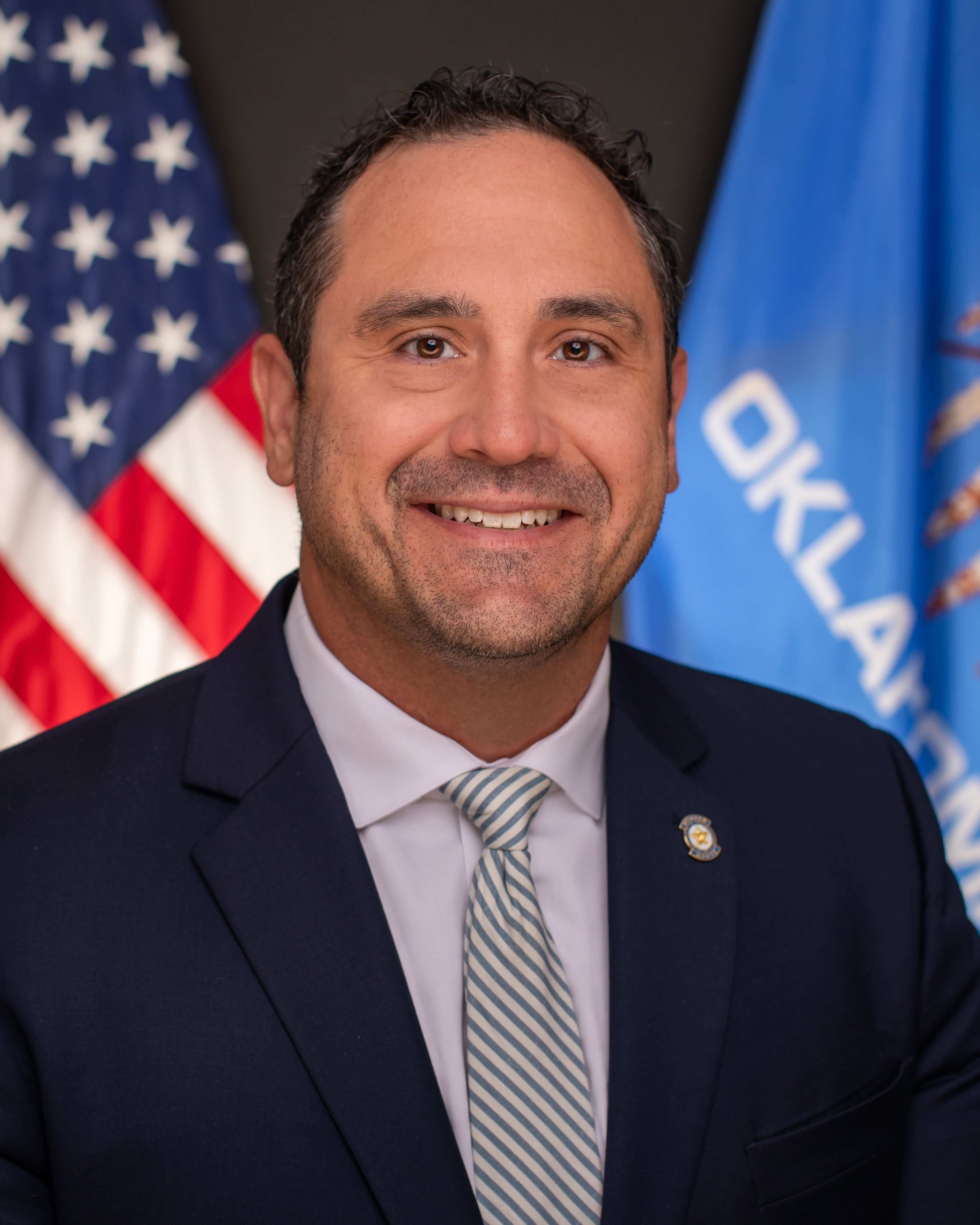
Representative Nick Archer

Hi, I'm Nick Archer and I represent the people of Oklahoma's 55th District.

representative

Leadership

Majority Caucus Vice Chair

60th Legislature

News & Announcements


Jan 21, 2026
Recent Posts

Archer Bill Could Attract National Laboratory; House Energy Chair Pushes State to 'Think Bigger'

Rep. Nick Archer, R-Elk City, has introduced legislation establishing a statewide effort designed to position Oklahoma to compete for a U.S. national laboratory and other major federal research centers. If passed into law, House Bill 3176 would establish the Oklahoma Gas, Artificial Intelligence, and Space Research Hub (GAS Hub) to serve as a central coordinating entity, connecting state agencies, higher education and industry partners. The legislation is designed to create organizational readiness rather than initiate a specific project, establishing a disciplined framework for federal engagement, site evaluation, workforce alignment and long-term competitiveness. The GAS Hub would be located within the Department of Commerce. Archer said the focus is to attract long-term research investment and support advanced workforce development across the state. The GAS Hub could lead to new high-paying technical jobs, expanded opportunities for CareerTech graduates and university researchers, and economic growth in both rural and urban communities.  "Great opportunities don’t wait for states to catch up," Archer said. "We have the talent and resources available, but we need Oklahoma to be in position when the starting gun goes off, so we don't miss our chance. By laying the groundwork now, we can make sure we're organized and truly competitive when the time comes to seize the next opportunity." Archer emphasized that national laboratories function as long-term economic engines, generating sustained federal research investment and compounded private-sector activity over decades. For example, Oak Ridge National Laboratory  contributes more than $7 billion annually to Tennessee’s economy, with similar long-term economic impact seen in states such as New Mexico . Archer, who chairs the House Energy Committee, pointed out that energy and aerospace, the state's two largest advanced industries, intersect directly with national security and supply chain networks, which he said would make Oklahoma a prime site selection for future national laboratories if there was an established framework. "When you look at the national lab system, nearly every energy sector is represented, except oil and gas," he said. "We're at a time when energy security, space technology and computing power are vital to our national defense and global competitiveness. If we're ready when the time comes, Oklahoma could have a once-in-a-generation economic opportunity." Archer also pointed to a recent economic analysis showing that Oklahoma has lost ground in advanced industries relative to peer states, a trend he said underscores the need for a more coordinated, long-term strategy of attracting IP and development capital. "This is not a failure of effort. It’s a signal that our model needs to change," Archer said. "The GAS Hub is how we start making that change." The bill also creates the Oklahoma National Laboratory Development Program, which would identify and prepare sites by aligning workforce pipelines and assembling the infrastructure and incentives needed to attract federal investment, such as the U.S. Dept. of Energy, NASA, and the U.S. Dept. of War. With federal research priorities evolving and Oklahoma’s congressional delegation in key leadership roles, Archer said the timing is right to begin building the framework now. "House Bill 3176 is ambitious, and it may be hard, but the things worth doing usually are," Archer said. "When Oklahoma puts the right framework in place whether in aerospace, logistics or major national events, opportunity follows. This bill is about building the foundation for the next generation of opportunity." HB3176 would require annual reporting to state leadership to ensure transparency and accountability as the program moves forward. If enacted, the measure would take effect Nov. 1, 2026.


Oct 6, 2025
Recent Posts

Archer Leads Study on OCC Efficiency and Partnership with Oil & Gas

The Oklahoma House Energy Committee this week heard a study, led by Chair Rep. Nick Archer, R-Elk City, examining the Oklahoma Corporation Commission’s (OCC) regulation of the state’s oil and gas industry, including workforce challenges, orphan well plugging and seismic activity. Archer said the study was designed to give legislators and stakeholders a clear look at the OCC’s current operations, regulatory responsibilities and funding concerns. "The Legislature must work with OCC to find solutions to the issues and gaps facing the agency, especially in the protest docket," Archer said. "If we remove barriers and work with Oklahoma’s oil and gas industry, we can help the Commission fulfill their mission and regulate the industry effectively while protecting jobs, revenue and public safety. But first, they need the resources, tools and authority to do their job well rather than the current slow, inefficient process." Jeremy Hodges, director of the OCC's Oil and Gas Conservation Division, emphasized the gap between industry revenues and OCC funding. "We regulate this industry with less than one percent of the revenue that we bring in," he said . One of the study's central topics was delays to the protest docket, which is OCC's process for hearing contested oil and gas cases. OCC's Director of Administration Brandy Wreath said frequent continuances, attorney scheduling conflicts and a shortage of court reporters and judges have slowed the docket significantly. Since these cases can involve major projects and millions in production, delays on the protest docket can have a significant economic impact. Wreath added that both court reporters and judges who work on the protest docket are "grossly underpaid" and plans to ask for a legislative carveout to pay competitive salaries. Archer asked how to prevent abuse of the protest docket system. He pointed to a large producer who is facing protests from entities that, rather than having an actual issue with the case, were instead trying to gain a better understanding of it. Wreath said the Commission has done what they can to address abuse of the system, but they're still limited by the lack of attorneys and judges. Another major focus of the study was Oklahoma’s backlog of orphan wells. Hodges said, at the current pace, it would take over 200 years to plug every orphan well in the state. Deputy Director Mike McGinnis added that even after plugging around 4,500 wells with the latest federal grant money, more than three-quarters of Oklahoma's orphans wells will remain. The committee also reviewed induced seismicity and regulatory strategies. Wreath said that OCC, industry leaders and legislators need to work together to determine policies moving forward. "I think it's one area where we failed is one side of the equation comes up with an idea that we're not all in agreement [with] when we leave the table," he said . "Even if we don't get what we want, we need to figure something out that every size of producer can agree to, that the Legislature can agree is right, the commissioners can agree, because they're gonna be issuing the orders, and then we all leave with the same marching orders and say this is what we're gonna do as a state." Other topics discussed during the study included public safety and emergency response, staffing challenges, modernization efforts and statutory clean-up, as well as a detailed breakdown of OCC's funding. "Let's hone in on those funding needs and opportunities so that we can look to help move the ball forward for, as noted multiple times, our state's largest highest employing industry," Archer said at the end of the meeting. 


Sep 19, 2025
Recent Posts

Archer Elected Vice Chair of The Energy Council

Rep. Nick Archer, R-Elk City, was elected vice chair of The Energy Council, an international nonpartisan organization focused on energy policy. Archer was elected vice chair during the Council's annual meeting in Anchorage, Alaska. He will step into the chairmanship in 2026-2027. "I’m honored to serve as vice chair of The Energy Council," Archer said. "Oklahoma has long been a leader in powering our nation, and energy remains a top industry in our state. I look forward to working with colleagues from across the country and beyond to promote an energy infrastructure that strengthens our economy, ensures reliability and secures America’s energy future." He has served on the Council's Executive Committee since February and has been a member of the Council since 2021. In the Oklahoma House, Archer chairs the House Energy Committee and is a member of the House Energy and Natural Resources Oversight Committee. He has represented House District 55 in western Oklahoma since 2022 and previously served as mayor of Elk City.