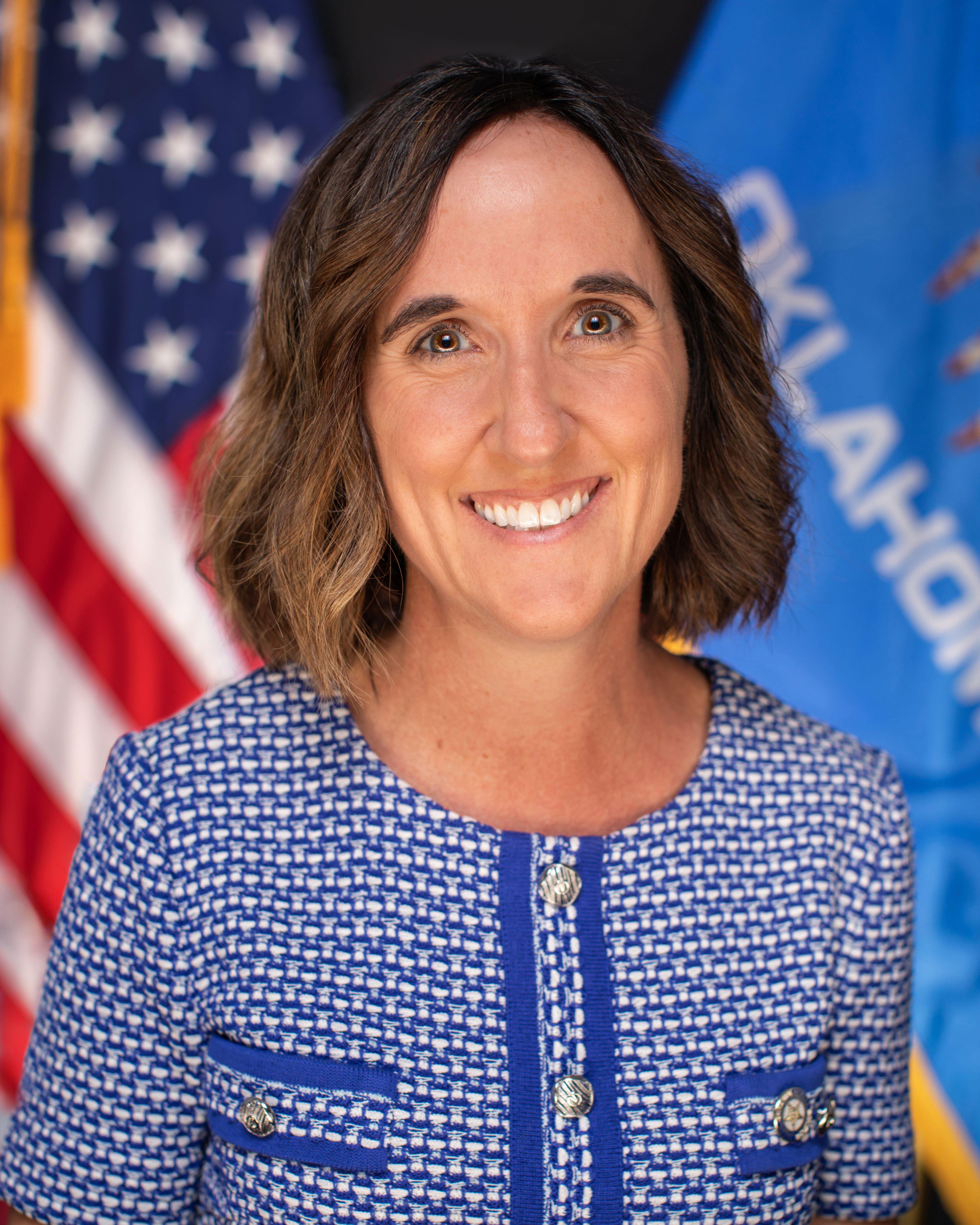
Representative Ellen Pogemiller

Hi, I’m Ellen Pogemiller and I represent the people of Oklahoma’s 88th District.

representative

News & Announcements


Oct 12, 2026
Recent Posts

Pogemiller, Grego Study Effects of Kratom, THC Drinks on Youth

OKLAHOMA CITY – Reps. Ellen Pogemiller, D-Oklahoma City, and Jim Grego, R-Wilburton, on Monday hosted an interim study on the effects of the marketing and sales of kratom and THC drinks on Oklahoma children. The study, held before the House Alcohol, Tobacco and Controlled Substances Committee, explored methods of regulation and advocacy in order to better understand the nature of these products and how to protect the state's youth from substances, some of which have been shown to carry high health risks, including death. “I am grateful to the committee for hearing this study today and to Representative Grego for joining me on studying this important issue," Pogemiller said "It’s my responsibility not only as a state representative, but as a mother to ensure Oklahomans are aware of the dangerous and addictive products such as kratom sold in our state that are being advertised to our children. We have work to do to ensure these products are not reaching our youth and that Oklahomans understand the devastating and harmful effects these products have. I’m thankful to all who testified and presented research on this as we look at policy solutions this upcoming legislative session that work to protect Oklahomans from dangerous and accessible substances.”  Grego said he requested to join the study because many of his constituents have shared similar concerns. This included Pittsburg County resident Steve Covington who told study participants about his son who is still undergoing rehabilitation to be free of the effects of kratom and its derivatives. "Hearing Mr. Covington's story about a son whose entire life changed because of this substance, was one reason I asked to be a part of this discussion," Grego said. "Here's a young man who has a wife and children, who had a good job, a nice house and so much more. Yet addiction to this product that was marketed as a natural substance that could boost his energy and help with soreness has almost ruined him. We've got to consider what we can do as a state to better address this." Study presenters, including Donnie Anderson, director of the Oklahoma Bureau of Narcotics, shared that kratom is marketed as a plant-based herbal supplement made from the leaves of a tropical tree native to Southeast Asia. Consumers claim it can be an energy booster, a mood lifter, a pain reliever or a relaxant that can have both sedative and stimulant effects, depending on dosage. Kratom is often paired with additives such as mitragynine, an active alkaloid, and 7-hydroxymitragynine, or 7-OH. The products are easy to find in convenience stores and gas stations across the state, and they are easy for teens to purchase, according to numerous study presenters. The products themselves, especially with derivatives combined with other substances, however, can carry high risk of addiction and negative health consequences, including death, according to Chief and Deputy Chief Forensic Toxicologists Dr. Jesse Kemp and Dr. Kacey Cliburn with the Oklahoma Office of the Chief Medical Examiner. Cliburn shared that mitragynine was listed as a contributory factor on 44 Oklahoma death certificates from 2021 to 2025. Between January 2025 and June this year, mitragynine and or an alkaloid were listed as a factor in 42 deaths, so the problem is growing. She said the laboratory began identifying more cases with the potent alkaloids in early 2026 and issued a public service alert in May. Mitragynine is now among the top five drugs listed for cause of overdose death along with methamphetamine, fentanyl, cocaine and ethanol. "Our office has never experienced a situation like this, in which an uncontrolled, over-the-counter commercial product has displaced a drug in the top five listed in the cause of death," Cliburn said . Several constituents of the representatives shared personal stories during the study. Angela Goins spoke of the death of her brother who she said became addicted to kratom pills that had dangerous additives. She said the research she had to do to discover the true effects of the derivatives was overwhelming and said it is too hard for law enforcement or lawmakers to keep up with the constantly changing over-the-counter products that are available to Oklahomans. "For my family, this isn't an abstract discussion about chemistry, it's the reason my brother is gone," Goins said . Tiffany Sprague said her daughter became addicted to a kratom drink that was marketed to her as a natural herbal supplement that could help her with energy, weight loss and pain relief as she pursued competitive dancing. Her daughter, Isabella Gardner, and 19-year-old Braxton Bunch shared stories of addiction, detox and the long fight for sobriety. Presenter Frank Turner said he's worked in the field of addiction for more than 25 years, and he's the guy that gets the call from family members asking for help. "Drugs are killing our kids," Turner said. "And how many of us have to die for us to make some drastic changes? There are more drugs in schools than on the streets of Oklahoma. We send our kids to school and think that they're learning, but what they're learning in school is how to get high." Judge Kenneth Stoner, a district judge who works in Oklahoma County Home Treatment Courts, shared additional statistics and risks. Tane Webb, a substance use policy analyst with the Healthy Minds Policy Initiative, which has offices in Tulsa and Oklahoma City, explained that while kratom products are readily available over the counter in many Oklahoma gas stations and vape shops, many consumers are unaware of undisclosed synthetic ingredients that carry significant risk. Webb said that while Oklahoma has a Kratom Consumer Protection Act on the books, enforcement of regulations has not kept pace with the changing landscape. His recommendations include increasing the legal purchasing age to 20-plus and prohibiting free or promotional distribution; updating Oklahoma law to limit legal kratom products from natural plant material; establishing consistent standards for alkaloid limits and measurement of concentrations; broadening the scope of enforcement beyond kratom and expanding state capacity for product testing; and increasing education among health care providers, vendors and the public; among others. Michella Carter, technical manager of the Seized Drug Unit, and Melissa Brous, technical manager of the Forensic Toxicology Unit with the Oklahoma State Bureau of Investigation, shared costs of kratom testing in Oklahoma – almost $2.7 million in one-time costs and almost $800,000 annually recurring. Former Rep. Doug Cox, R-Grove, also addressed study participants saying state residents have been down this road plenty of times in the past with marijuana, opioids and other substances. "If you are really interested in saving Oklahoman's lives; if you are really interested in keeping Oklahoma families from being destroyed, then outlaw all of it," he encouraged. The study can be viewed on the House website under News & Media, Live Proceedings. Search the calendar for Oct. 12, Alcohol, Tobacco and Controlled Substances, 9:30 a.m. -END- Ellen Pogemiller serves District 88 in the Oklahoma House of Representatives. Her district includes part of Oklahoma County. Jim Grego serves District 17, which includes Latimer County and part of Pittsburg County.  


Apr 9, 2026

House Democrats push back on measure allocating public tax dollars to private schools advancing House

OKLAHOMA CITY – Oklahoma House Democratic members raised concerns over the passage of HB 3705 off the House Floor. HB 3705 increases the annual cap for the Parental Choice Tax Credit from $250 million to $275 million.  “We are effectively appropriating $275M in public tax dollars toward private schools while our public schools lack critical investments and remain the lowest ranked in the nation,” said House Democratic Leader Cyndi Munson, D-Oklahoma City. “Our teachers, students, parents, and support staff have all been clear about their needs, but Republican leadership has failed to listen to them. It was reported that 90% of the recipients of this voucher were already sending their children to private schools. While I am grateful our teachers are getting a much needed pay raise, $2,000 still does not make us competitive in the region and we continue to leave behind support staff. Not to mention, tying a teacher pay raise to private school funding is offensive. $275M would be transformative for our public schools and allow for an even higher teacher pay raise than what has been proposed by Republican leaders. An investment in public schools is an investment in Oklahoma. In this year’s budget, every additional dollar appropriated to public education is attached to a new mandate by the Legislature. If we are going to put public dollars into private schools, we should require the same requirements, oversight, and transparency from private schools as we do public schools. I am proud today to continue advocating for public education and standing with our families who send their children to public schools.” House Democratic Assistant Leader Melissa Provenzano, D-Tulsa, debated against the measure. "Not every kid. Not every parent," said Provenzano. "In 2023, the PCTC was originally billed as a way for low-income students to gain access to private schools. Today, less than 1% of students receiving the voucher come from low-income families. What happened?  “I begrudge no parent who wishes to send their child to a private school, but taxpayers statewide should not subsidize tuition unless every Oklahoma parent who wants it has the same access to the private school of their choice. We're better off investing those dollars statewide in our public schools, who are required by our constitution to accept all students. School choice for me but not for thee is not a responsible or ethical way to govern." Rep. Ellen Pogemiller, D-Oklahoma City, also debated against the measure, arguing that parents are not looking to move their children out of public schools into private schools. “Families who choose to send their children to public schools continue to choose public schools, even when subsidies are provided to incentivize families to choose private schools,” said Pogemiller. “The Parental Choice Tax Credit subsidy is mainly being provided to families who are already attending private schools, 24% of whom make over $250K a year. The funds from this subsidy are concentrated in wealthy, urban areas while 61 counties in Oklahoma receive less than 1% of the subsidy. 5 counties in Oklahoma do not even receive enough of the subsidy to be given a percentage. This measure does not support Oklahomans who need it most. If we took the $275M from this subsidy toward our public schools, we would virtually send $338 to every public school student in Oklahoma.  “Taking $275M from out of general revenue every year to go toward private schools and the wealthiest Oklahomans means $275M that are not going toward critical services in Oklahoma like childcare. Instead, this body has passed a budget that will cut childcare subsidies starting July 1, which means a family of four who makes above $51,665.35 will no longer have access to the childcare services they need. Childcare services have sounded the alarm that this will result in many of them being forced to close their doors. Now is not the time to expand subsidies to families who can afford private schools. It is time to ensure Oklahoma families have access to the childcare services they need so they don’t have to choose between staying in the workforce and taking care of their families. Now is the time to prioritize real solutions for real issues being faced by working Oklahoma families, and this measure does not do that.” -END-


Feb 23, 2026

Clinton, Pogemiller bills to address student evictions advance

OKLAHOMA CITY – Rep. Amanda Clinton, D-Tulsa, and Rep. Ellen Pogemiller, D-Oklahoma City, both advanced bills through committees that help to address student outcomes and chronic absenteeism in school by reducing student evictions.  HB 3386 by Rep. Clinton seeks to combat chronic absenteeism and improve student outcomes by requiring mediation through Oklahoma’s Early Settlement Mediation Program before evicting a household with minor children. This mediation program is free for both parties, and mediation typically takes place just outside the courtroom on the same day as eviction proceedings. Oklahoma’s free mediation program is nationally renowned with a 70 percent success rate, and mediation is typically completed within an hour on the same day. Importantly, HB 3386 does not allow tenants to squat, does not extend statutory eviction timelines, does not impose additional costs or fees on landlords or tenants, and does not tilt the scale in favor of either party.   “Chronic absenteeism is closely linked with lower test scores and poor educational outcomes, so if we are going to improve education in Oklahoma, it starts with stabilizing housing for kids,” Clinton said. "The purpose of HB 3386 is simple and takes a common-sense approach. It helps stabilize housing for children without burdening landlords or delaying evictions. I also own and manage rental properties, so I fully respect property owners' rights. However, I also recognize the desperate need to curb chronic absenteeism as an educational and future workforce issue. HB 3386 simply asks people to attempt to resolve their issues by talking first, a skill that is quickly becoming a lost art.”  Even short disruptions, such as couch-surfing and switching schools mid-semester, can have lasting educational consequences, but HB 3386 takes a narrow, practical approach to ensure that students have the best opportunity to continue their education without disruption. The measure now moves to the Judiciary and Public Safety Oversight committee. HB 3698 by Rep. Pogemiller creates a pilot program in one metro community and one rural community (population 50,000–75,000) to provide legal representation to indigent families with students in pre-K through 12th grade. HB 3698 passed out of the House Appropriations and Budget Education Subcommittee.  “As we better understand the immediate and long-term impacts of evictions and housing instability on students, family support services have become an essential part of the education landscape,” said Pogemiller. “This is one small but meaningful step.” An interim study by Pogemiller found that in Oklahoma City Public Schools, 60% of students experiencing homelessness or housing instability were chronically absent during the 2024-2025 school year. The study also found that families of students in pre-kindergarten and kindergarten are facing the highest eviction rates of any grade level at Tulsa Public Schools. HB 3698 helps to ease this massive burden on Oklahoma families so that students can continue learning without disruption. The measure now moves to the Full House Appropriations and Budget Committee. Both bills are designed to provide Oklahoma students with the best opportunities for educational success as they face circumstances beyond their control. -END-