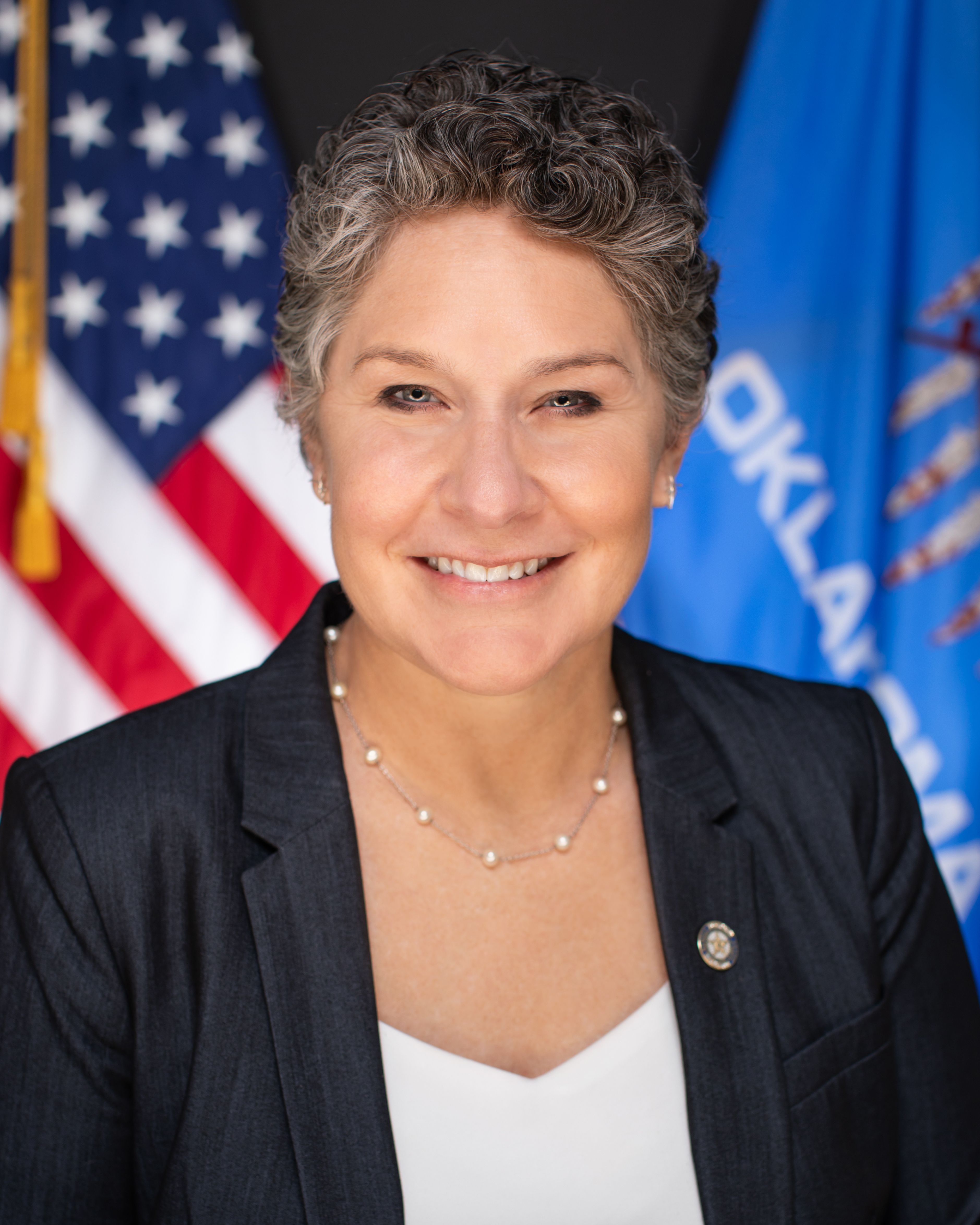
Representative Melissa Provenzano

Hi, I’m Melissa Provenzano and I represent the people of Oklahoma’s 79th District.


representative

Leadership

Assistant Minority Leader

59th Legislature

Assistant Minority Leader

60th Legislature

News & Announcements


Oct 22, 2026

Joint study examines Methods of Dealing with Continued Delays in Chain of Custody, Testing of Sexual Assault Kits, Storage of Non-Reported Kits

OKLAHOMA CITY – Representatives Melissa Provenzano, D-Tulsa, and Cynthia Roe, R-Lindsay, along with Senators Carri Hicks, D-Oklahoma City, and Julie McIntosh, R-Porter, held a joint interim study in the House Public Health Committee on Thursday. The study looked at ways to circumvent delays in chain of custody and the testing of sexual assault kits, identify cracks in the testing system, possible timeline changes, and the best way to store non-reported kits, or kits in which the victims do not wish to press charges. “Today, we heard from law enforcement professionals and experts that identified areas of improvement and solutions the legislature can take to reduce the turnaround time for forensic testing of sexual assault kits and to more quickly work toward the justice all Oklahomans deserve,” Provenzano said. “Oklahoma is 3rd in the nation for reported rape cases. Two-thirds of assaults go unreported to law enforcement. We can and must take the next step in our efforts to expedite the journey towards justice for the victims. They deserve it.” Danielle Tudor, Special Designee of the Office of the Attorney General, gave a presentation showing the need for reforms in sexual assault kit collection and turn around time. Oklahoma currently ranks third in the nation for rates of sexual assault. “Too many Oklahomans have waited far too long for justice, yet for years more than 9,000 sexual assault kits sat untested across Oklahoma. That failure cannot happen again,” said Hicks, who is an appointed member of the state’s SAFE Board. “As we near the end of clearing this backlog, we must turn lessons learned into bold action by establishing clear timelines, strengthening accountability, and ensuring every survivor has a path to swift justice.” Mistie Burris, Criminalistics Administrator of the Oklahoma State Bureau of Investigation says OSBI is  currently tracking over two thousand kits . Burris suggested a shorter timeline for sexual assault kit collection. Currently, it takes an average of 7.47 days to collect a sexual assault kit. Burris proposed shortening that timeline to two days.  OSBI reports that since the statute changed in 2019 to require submission of all reported kits, submissions tripled. "As a health care professional, I know how important it is that survivors receive compassionate care and that the evidence collected is handled properly, and as a lawmaker, I also know how important it is that the system works as intended once a kit has been collected," Roe said. "No kit should be lost, left behind or delayed unnecessarily. This study helped my colleagues and I identify gaps in the chain of custody, discuss how to improve testing timelines and consider responsible procedures for storing kits when a survivor is not yet ready to report. Survivors deserve a system they can trust at every level of this process." The Tulsa Police Department also presented at the study and showed similar reports of a backlog in sexual assault kits since the statute change in 2019. In 2018, the department reports having 167 sexual assault DNA testing requests, whereas in 2025, that number rose to 365 sexual assaults. To help the backlog, TPD requested state funding for outsourcing sexual assault kits to a vendor laboratory with an estimated fiscal impact of $400K. The Oklahoma City Police Department recommended to members at the study that they establish a 180-day timeline for reported sexual assault kits, define the requirement around the kit, preserve forensic discretion by allowing experts to determine what additional tests, if any, are needed, and monitor capacity and outcomes so we can continue working toward the most effective and efficient methods of sexual assault kit testing. “Every sexual assault evidence kit left waiting on a shelf represents a person who is waiting for justice," said McIntosh. "This interim study allowed us to better understand where we are in dealing with the backlog in testing and how we can support the people working to solve these cases to get access to DNA evidence more quickly. Though our state has made progress, there is more to be done to help survivors and law enforcement get the answers they need to bring justice and closure. Oklahoma can lead the way in swift, effective, and accurate evidence collection and testing." The entire study can be viewed on the Oklahoma House of Representatives Website. -END-


Apr 20, 2026

Provenzano Honored with 2026 National ACOG Public Service Award

OKLAHOMA CITY – Sunday, Rep. Melissa Provenzano, D-Tulsa, was the recipient for the 2026 National Public Service Award from the American College of Obstetricians and Gynecologists (ACOG). The award is presented to state lawmakers who promote women’s healthcare through legislation. Provenzano has worked to expand access to women’s healthcare for years. In 2024, she brought forth landmark legislation to fund diagnostic mammograms to fill critical gaps in preventive, lifesaving care. In 2025, HB 1389 became law following a veto override with overwhelming bipartisan support. “It is an honor to receive this award from ACOG and to be recognized for my work in advancing healthcare coverage for women in Oklahoma,” said Provenzano. “Early detection saves lives, and I am proud to work toward better access to women’s healthcare. When the legislature comes together on a single issue, it is a sign that it is not only important, but essential. I plan to continue my advocacy for better healthcare access and outcomes for Oklahomans.” Two years ago, Oklahoma became the 10th state in the nation to require coverage for diagnostic mammograms with no out of pocket expense. 1 in 8 women across America will be diagnosed with Breast Cancer. In Oklahoma, that number is closer to 1 in 6. The award was presented by William Po, MD, FACOG, Legislative Chair of the ?Oklahoma Section of ACOG. ? -END-


Apr 9, 2026

House Democrats push back on measure allocating public tax dollars to private schools advancing House

OKLAHOMA CITY – Oklahoma House Democratic members raised concerns over the passage of HB 3705 off the House Floor. HB 3705 increases the annual cap for the Parental Choice Tax Credit from $250 million to $275 million.  “We are effectively appropriating $275M in public tax dollars toward private schools while our public schools lack critical investments and remain the lowest ranked in the nation,” said House Democratic Leader Cyndi Munson, D-Oklahoma City. “Our teachers, students, parents, and support staff have all been clear about their needs, but Republican leadership has failed to listen to them. It was reported that 90% of the recipients of this voucher were already sending their children to private schools. While I am grateful our teachers are getting a much needed pay raise, $2,000 still does not make us competitive in the region and we continue to leave behind support staff. Not to mention, tying a teacher pay raise to private school funding is offensive. $275M would be transformative for our public schools and allow for an even higher teacher pay raise than what has been proposed by Republican leaders. An investment in public schools is an investment in Oklahoma. In this year’s budget, every additional dollar appropriated to public education is attached to a new mandate by the Legislature. If we are going to put public dollars into private schools, we should require the same requirements, oversight, and transparency from private schools as we do public schools. I am proud today to continue advocating for public education and standing with our families who send their children to public schools.” House Democratic Assistant Leader Melissa Provenzano, D-Tulsa, debated against the measure. "Not every kid. Not every parent," said Provenzano. "In 2023, the PCTC was originally billed as a way for low-income students to gain access to private schools. Today, less than 1% of students receiving the voucher come from low-income families. What happened?  “I begrudge no parent who wishes to send their child to a private school, but taxpayers statewide should not subsidize tuition unless every Oklahoma parent who wants it has the same access to the private school of their choice. We're better off investing those dollars statewide in our public schools, who are required by our constitution to accept all students. School choice for me but not for thee is not a responsible or ethical way to govern." Rep. Ellen Pogemiller, D-Oklahoma City, also debated against the measure, arguing that parents are not looking to move their children out of public schools into private schools. “Families who choose to send their children to public schools continue to choose public schools, even when subsidies are provided to incentivize families to choose private schools,” said Pogemiller. “The Parental Choice Tax Credit subsidy is mainly being provided to families who are already attending private schools, 24% of whom make over $250K a year. The funds from this subsidy are concentrated in wealthy, urban areas while 61 counties in Oklahoma receive less than 1% of the subsidy. 5 counties in Oklahoma do not even receive enough of the subsidy to be given a percentage. This measure does not support Oklahomans who need it most. If we took the $275M from this subsidy toward our public schools, we would virtually send $338 to every public school student in Oklahoma.  “Taking $275M from out of general revenue every year to go toward private schools and the wealthiest Oklahomans means $275M that are not going toward critical services in Oklahoma like childcare. Instead, this body has passed a budget that will cut childcare subsidies starting July 1, which means a family of four who makes above $51,665.35 will no longer have access to the childcare services they need. Childcare services have sounded the alarm that this will result in many of them being forced to close their doors. Now is not the time to expand subsidies to families who can afford private schools. It is time to ensure Oklahoma families have access to the childcare services they need so they don’t have to choose between staying in the workforce and taking care of their families. Now is the time to prioritize real solutions for real issues being faced by working Oklahoma families, and this measure does not do that.” -END-