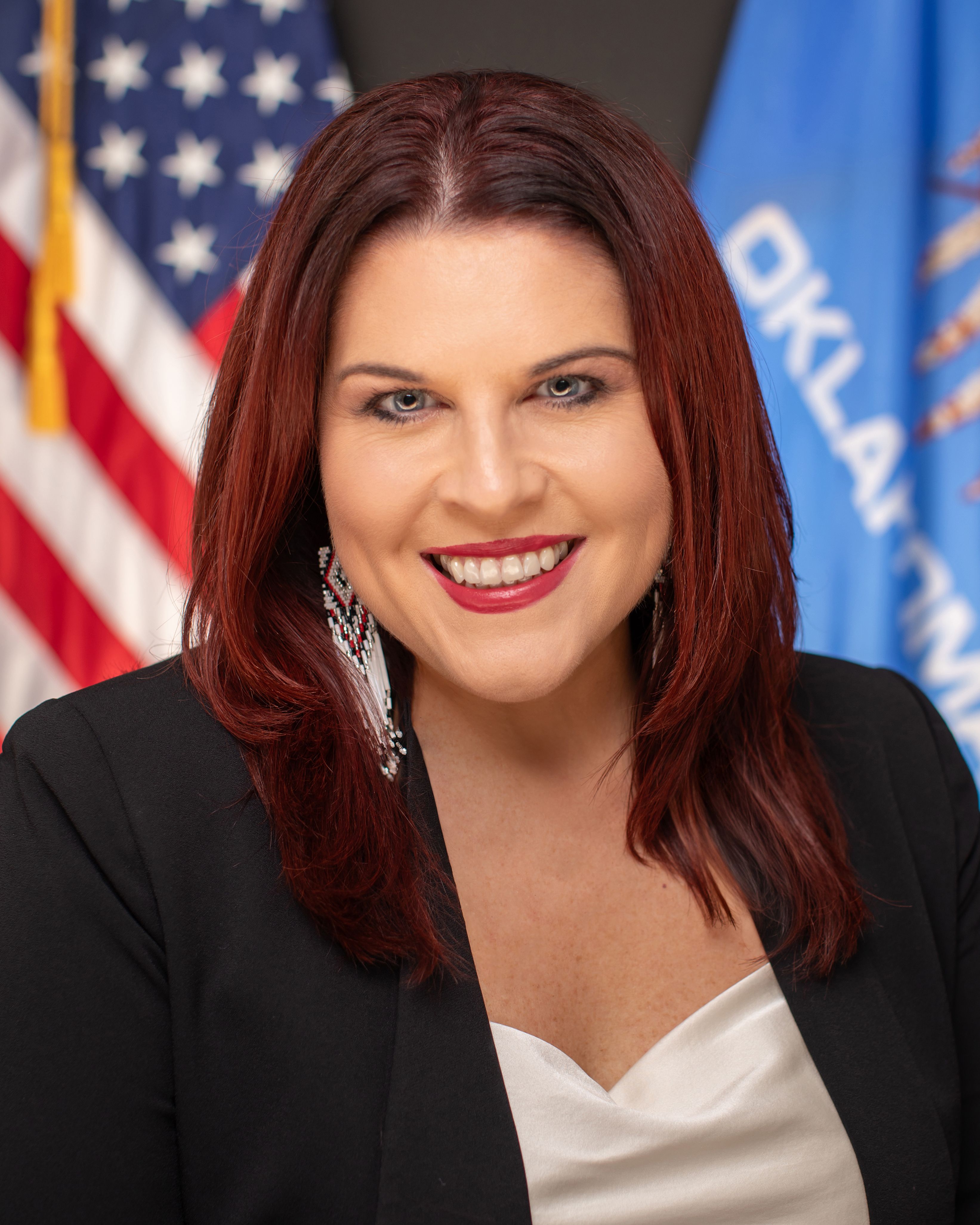
Representative Amanda Clinton

News & Announcements


Feb 13, 2026

Clinton passes bill to safeguard Oklahoma electricity customers from unfair costs

OKLAHOMA CITY – Rep. Amanda Clinton, D-Tulsa, unanimously passed  HB 3392  out of the House Utility Committee with a 9-0 vote. The measure directs the Oklahoma Corporation Commission (OCC) ?to examine how large, energy-intensive industrial projects like data centers impact our electric ?grid and ensure that everyday Oklahomans aren’t stuck paying for electricity they did not ask for ?and of which they are not the primary beneficiaries.? HB 3392 was included as one of the priority pieces of legislation for the Oklahoma House ?Democratic Caucus for the Second Regular Session of the 60th Legislature. As more high impact ?projects request hundreds or even more than 1,000 MW of power from companies like PSO and OG&E, HB 3392 asks the Corporation Commission to clearly define “large load electric customer," as a first step in protecting regular consumers from picking up the bill for this added ?capacity.? ?“Working Oklahoma families, low-income households and fixed income households already feel the burden of rising costs. As hyperscale data centers are built to meet the growing demand for ?generative AI and cloud storage, it is important we protect current customers from carrying the ?weight of those costs,” said Clinton. “I enjoy my devices and modern conveniences just as much ?as the next person, but the bottom line is this: if multi-billion-dollar tech companies need more ?electricity for their business model, they should have to pay for it. I am thankful to the committee ?for hearing this bill and sharing my commitment to protect the pockets of Oklahomans.”? HB 3392 is designed to ensure transparency, fairness, and ratepayer protection for working ?Oklahomans. It is not meant to regulate or restrict large load customers. Rather, the goal is to ?provide data to lawmakers to make informed policy decisions that ensure existing customers are ?not overburdened with big tech’s energy needs. ? Under the measure, the Corporation Commission would report the impact of large load electric ?customers, such as data centers and energy intensive manufacturing on infrastructure, reliability, and ratepayers to legislative leaders by December 1, 2027. ? The bill now moves to the Committee on Energy and Natural Resources Oversight.? -END-


Jan 29, 2026

Oklahoma House Democratic Caucus unveil policy priorities to support everyday Oklahomans

OKLAHOMA CITY – The Oklahoma House Democratic Caucus unveiled their policy priorities for the Second Regular Session of the 60th Legislature. The following policy agenda prioritizes affordability for Oklahoma families and ensuring their paychecks can keep up with everyday life.  “Oklahoma House Democrats know whether it be groceries, rent, health care, insurance, or child care, the cost of being alive keeps going up,” said House Democratic Leader Cyndi Munson, D-Oklahoma City. “Oklahomans are continuously choosing between which needs to meet each month in order to make it to the next pay period. It is up to state leaders and lawmakers to do what we can to ensure Oklahomans can support themselves and their families. That starts with giving every working Oklahoman a livable wage and focusing on policies that lower costs.” Recently, the Tulsa Area United Way released a report showing nearly 50% of working Oklahoma families are working more than one job and cannot cover basic necessities. While there is an upcoming state question to raise the minimum wage, there are actions legislators can take now. Leader Munson is the primary House author of HB 2230, which requires the state minimum wage to be the greater of $15 per hour or the federal minimum wage. House Democrats believe one way to prioritize affordability is to ensure Oklahomans are charged fairly for utility/energy costs by holding corporations accountable. HB 3392 by Rep. Amanda Clinton, D-Tulsa, directs the Corporation Commission to examine how large industrial projects such as data centers and energy-intensive manufacturing impact our electric grid, and ensure that everyday Oklahomans aren’t stuck paying for electricity they did not ask for and of which they are not the primary beneficiaries. Insurance and premium rates are also on the rise. HB 4286 by Rep. Andy Fugate, D-Del City, prohibits an insurance company from using a person’s credit score to determine the rates they pay for insurance. The measure is designed to protect hardworking Oklahomans who are being priced out of basic financial stability by an insurance system that punishes people for their credit history rather than their actual risk.  Another measure House Democrats have proposed to address skyrocketing insurance rates is HB 3384 by Rep. Trish Ranson, D-Stillwater. The measure would require annual homeowner’s policy renewal premium increases to be capped at a maximum of 10%. Oklahomans’ home insurance rates were reportedly projected to increase by 8% in 2025. This measure would ensure Oklahomans are not blindsided by rising costs. To combat rising health insurance costs in Oklahoma, HB 3675 by Rep. Melissa Provenzano, D-Tulsa, requires a qualified human to be the final qualifier for health insurance claims at risk of denial when processed by AI to ensure proper accountability and oversight when charging Oklahomans. House Democrats know that groceries are too expensive. In 2024, House Democrats led a bipartisan effort to successfully eliminate the state sales tax on groceries. This year, Leader Munson has introduced HB 3959 to eliminate unfair personalized algorithmic and surveillance pricing. This policy works to stop companies from unfairly charging Oklahomans different prices for the same items. House Democrats also unveiled legislation to help fund our public schools in Oklahoma and ensure public dollars go toward public schools. Right now, millions of Oklahomans’ tax dollars are going toward the Parental Choice Tax Credit that reportedly benefits only the wealthiest Oklahomans.  HB 3684 by Rep. Provenzano would eliminate the Parental Choice Tax Credit and redirect those dollars toward our public schools. House Democrats believe investing in public education gives Oklahoma a chance to rise in the national ranks while giving our students the best opportunities for success. This session, Oklahoma House Democrats remain committed to helping working Oklahomans' paychecks keep up with everyday life through real policy solutions that prioritize affordability for Oklahomans.  You can view the entire policy rollout on the  Oklahoma House Democrats Facebook Page.  -END-


Oct 22, 2025

Clinton studies impact of data center expansion on Oklahoma’s water resources and power grid

OKLAHOMA CITY – Rep. Amanda Clinton, D-Tulsa, conducted an Interim Study on the impact of data center expansion on Oklahoma’s water resources and power grid in front of the Utilities Committee.  Data centers range from small to regional facilities that support hospitals, universities, or private businesses to large-scale developments called “hyperscalers,” that support social media, streaming services and generative AI. Clinton’s study focused primarily on hyperscalers as they are experiencing the most significant growth. “Data centers are an increasingly significant part of Oklahoma’s economy and infrastructure,” said Clinton. “But as this industry experiences unprecedented growth, it is also poorly understood by many. In short, data centers power our everyday lives, fuel our modern conveniences and make daily tasks more manageable. As our demand for this technology increases, so does the need for data centers. However, these hyperscalers may also use incredible amounts of electricity and water for cooling their servers, while their true economic impact is largely unstudied.” Clinton was first inspired to conduct this study after seeing headlines in her district about potential data centers in Tulsa and their use of millions of gallons of water per day. Today’s study confirmed that data centers require massive amounts of water, but alternative technologies can mitigate overuse.  “My goal today was to start a real conversation about how we accommodate this growing industry without compromising water quality and quantity,” Clinton said. “I consider it my duty as a legislator to ensure Oklahomans have clean, plentiful water for everyday use and recreation. Because at the end of the day, you can’t drink data.”  In addition to the massive amounts of water hyperscale data centers may consume, they also require enormous amounts of electricity. In an Oklahoma Corporation Commission (OCC) filing last month, Public Service Company of Oklahoma (PSO) reported an unprecedented need for more electricity, due to “data centers, manufacturers and other industrial businesses.”  In their filing, PSO reported it has signed an agreement with a new customer that will eventually result in a load of over 1,000 MW, when the largest single customer in PSO’s history required only 130 MW. The company said it has Letters of Agreement or contracts with eleven other customers that require 50 MW or more. The company is currently seeking OCC approval for the recovery of costs for new power generation. The company stated in its filing that recovering these costs could result in an increase of about $10 per month to the average residential customer.    Clinton said one of her biggest takeaways was that the tech sector appears to be working directly with municipalities rather than the state of Oklahoma to develop these projects. That leaves many decisions in the hands of local leaders, meaning municipalities and counties bear the greatest responsibility for vetting these projects on behalf of their citizens. “Finding reliable data on how many permanent, local jobs hyperscalers create was difficult, and I was surprised to hear the Oklahoma Department of Commerce estimate that hyperscale data centers may create fewer than 10 jobs per structure on their campus,” Clinton said. “At the same time, the capital investment is undeniable. Several companies in Tulsa are growing their businesses by building data centers or supplying the equipment that fuels this technology, and that is good news for our region. It just shows how complex this industry is, and how important it is for local leaders to fully vet these projects with transparency, and prioritize economic development that puts Oklahomans and our quality of life first.”  Clinton said her goal for the study was not to make a blanket determination of the data center industry as “good” or “bad.” Rather, she hoped to gather answers to basic questions and concerns so communities can better manage this burgeoning industry responsibly, while putting Oklahomans first.   “I’m grateful to everyone who lent their time and expertise to this study, and I hope it’s only the beginning of a longer, meaningful conversation about this topic,” she said. Presentations provided a snapshot of economic aspects, energy, water, environmental, and community impacts of hyperscale data centers, along with ways to manage the industry to best serve all Oklahomans.  Speakers included: Commonwealth of Virginia’s Joint Legislative Audit & Review Commission (JLARC) Oklahoma Department of Commerce Payne County City of Stillwater Oklahoma Water Resources Board Oklahoma Department of Environmental Quality  Public Service Company of Oklahoma (PSO) The entire study can be viewed on the  Oklahoma House of Representatives Website. -END-