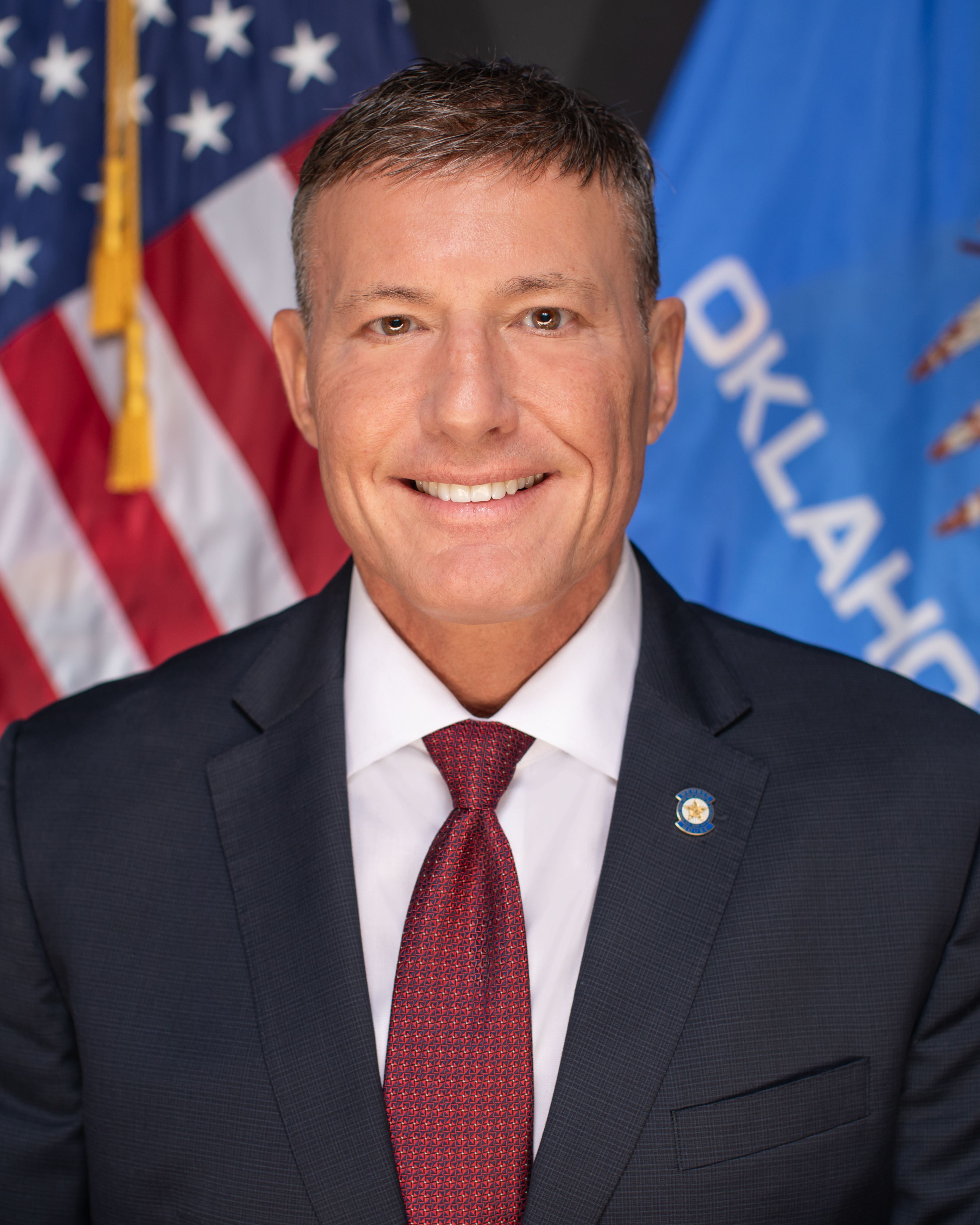
Representative Steve Bashore

Hi, I'm Steve Bashore and I represent the people of Oklahoma's 7th District.


representative

Leadership

Majority Deputy Floor Leader

59th Legislature

Majority Deputy Floor Leader

60th Legislature

News & Announcements


Oct 28, 2026
Recent Posts

New Laws Enhancing Punishments for Retail, Identity Theft and Overdose Notification, Fentanyl Reporting Take Effect Nov. 1

OKLAHOMA CITY – Rep. Steve Bashore, R-Miami, is the author of two new laws that take effect Nov. 1, both designed to improve public safety. House Bill 3244 strengthens punishments for organized retail crime and identity theft and closes loopholes to protect the vulnerable. House Bill 2941 requires first responders to notify law enforcement when treating a drug overdose and establishes that in cases of fatal overdoses involving fentanyl, that will be the presumed cause of death. "Both measures are designed to protect the public," Bashore said. "Whether it's cracking down harder on criminals who are stealing personal information and defrauding citizens and businesses, or getting people faster help during a drug overdose, the emphasis is on making sure Oklahomans are safe." HB3244 expands the definition and pattern of retail and identity theft crimes, and it closes a loophole where criminals exploit vulnerable populations, including the elderly and minors. It is reported that fraud cases have risen sharply in recent years. In 2019, the Federal Trade Commission received 3.5 million fraud reports. By 2025, that number had jumped to 6.5 million, with an estimated $12.5 billion in losses. HB3244 also strengthens identity theft laws by expanding the list of personal information someone can illegally possess or use with fraudulent intent to include fingerprints, PIN numbers, DNA, usernames, passwords and more. The bill strengthens penalties for repeat offenders and improves coordination between law enforcement and financial institutions investigating suspected fraud. Punishment ranges from 10 to 20 years in prison, fines of between $20,000 and $100,000, or both. HB2941 requires first responders to notify law enforcement as soon as practicable after attending to the medical needs of the person they are treating when a drug overdose is suspected. Legal immunity will be granted to those who make the notification in good faith. The measure also establishes that in cases of fatal overdoses involving fentanyl, that will be the presumed cause of death. The Oklahoma State Department of Health reports fentanyl was involved in 86% of opioid-related overdose deaths in 2024, compared to approximately 10% to 20% annually prior to 2020.  "Fentanyl is a growing problem in our state and across the nation, Bashore said. "Having more detailed data on the spread of this deadly drug in Oklahoma will help law enforcement identify problem areas, direct resources where they are needed most and better target those responsible for distributing this deadly drug." Bashore also authored House Bill 2959 , which took effect in May. The bill requires allegations of abuse or neglect by a school employee to be reported to law enforcement within 24 hours, prior of any formal investigation by the school or school board or the questioning of the subject of the accusation. "Too often, schools were interpreting the law to mean they had to notify law enforcement only after the school had finished its investigation into an allegation of abuse," Bashore said. "This clarifies the definition of immediately to mean within 24 hours. It gets quicker help for those traumatized by abuse and stops others from being victimized."


Sep 25, 2026
Recent Posts

Bashore Studies Challenges with Title 42 Transfers

OKLAHOMA CITY – Rep. Steve Bashore, R-Miami, on Wednesday held an interim study before the House General Government Committee examining the operational timeliness associated with the transfer of titles to wrecker companies and others when property has been abandoned or held as a lien. "The purpose of this study is to find solutions and hopefully resolutions with Service Oklahoma regarding the Title 42 process," Bashore said. Title 42 under Oklahoma Statute deals with possessory liens and the legal process of obtaining a clean title. This can be attempted by businesses such as mechanics, towing or wrecker services that seek to claim or foreclose on vehicles, boats, manufactured homes or trailers for unpaid repair work, storage or abandoned property removal. Possessors of such property must work through Service Oklahoma for the title. Multiple study presenters expressed frustration with the process. Many of the complaints centered around the National Moter Vehicle Title Information System (NMVTIS), utilized by Service Oklahoma to complete title searches. Complaints ranged from up to four-month wait times to get titles returned, lack of direct communication with NMVTIS and loss of money because of the extreme wait times – all of which hurts these businesses. Bashore said the idea for the study came from a constituent who owns a wrecker service who said it was taking excessive months to obtain titles. "They have to keep these vehicles on site, not being able to move them, and this is impacting these businesses economically," Bashore said. Bashore said he reached out to Service Oklahoma leadership, and they were very responsive. "Service Oklahoma, we know, had some issues in the past," Bashore said. "But it looks like they've made some progress and are doing good things in some areas. I'd like to commend them for that, but in this issue, we need some resolution." Bashore invited presenters from wrecker and title service companies and many in the auto industry to explain their experiences. He also asked Jay Doyle, chief executive officer, and Diedra O'Neil, chief strategy and operating officer, with Service Oklahoma to answer some of the complaints. Marcia Lock, an owner of G&M Wrecker Service in Pryor, OK, explained her company has a used dealer license and she is a Title 42 clerk who services seven wrecker companies and individuals throughout Northeast Oklahoma. "So, I see this from all aspects," she told committee members. Lock said she currently has 34 vehicles for individuals and wreckers' services dating back to the first of June that she has not received titles on because NMVTIS has a hold on them. "The Title 42 division is behind two months in okaying Title 42s," Lock said. "It's not the people's fault that work in these offices. They work their butts off. It's that they don't have enough help." Lock said one problem is that she and others have no way to contact NMVTIS directly to find out where the title is in process. Instead, they contact Service Oklahoma's corrections' office and are told nothing can be done. "As a wrecker company and business owner and used car dealer, we can't sell a car (we don't have title to), and we can't keep a car on the lot for seven or nine months without selling them," she said. Michelle Roeser, office manager at Stevens Ford in Enid, expressed similar frustrations. She said when they call Service Oklahoma's corrections office, they are told their only course of action is to sit and wait. "If NMVTIS would tell us what the problem is, we could help," Roeser said. "Communications with NMVTIS is impossible." Randy Floyd, general manager of Stevens Ford explained, "By the time we get our title back and can sell the vehicle, we've lost maybe $1,500 to $1,800 in value because the bank is only going to finance what the vehicle is worth at that time." Other study presenters included Joshua Falcon, owner of Falcon Title Services; John Holt owner and Tara Worbes who works in the title department at the John Holt Auto Group in Chickasha; Melissa Van Ostrand, chief financial officer with Fowler Automotive in Norman; and Shannon Hutton with Bob Moore Auto Groups in Oklahoma City. Jay Doyle and Diedra O'Neil with Service Oklahoma attempted to educate study participants on Title 42 processes at the agency and NMVTIS. They also detailed things they said are in the works to help alleviate some of the concerns and frustrations expressed by study presenters. "Anytime we do have people that are not satisfied with our services, we obviously want to make sure that we can improve that and make that better," Doyle said. Doyle said the agency's responsibility is to balance between two obligations. One is the desire to issue titles as quickly as possible, the other to be sure the state title is not incorrect, fraudulent, stolen or has other unresolved ownership records. Running NMVTIS checks on titles on the frontside of transactions started in 2025 at the urging of the Oklahoma State Bureau of Investigations, the attorney general's office and others, Doyle said. He said he believed the agency could make changes to this process to satisfy those seeking titles and those seeking to protect public safety. The study can be viewed on the House website, https://www.okhouse.gov/ , under live proceedings. Search by calendar day, Sept. 23, then for study IS26-032 Title 42-Liens, under General Government starting at 9 a.m.


Jul 28, 2026
Recent Posts

Bashore Named to National Gaming Council Executive Committee

OKLAHOMA CITY – Rep. Steve Bashore, R-Miami, has been named to the Executive Committee of the National Council of Legislators from Gaming States (NCLGS). The executive committee is the governing body of state lawmakers responsible for guiding the national, non-partisan organization that meets regularly to focus on the regulation, legislation and policies of the U.S. gaming industry. "I'm honored to both bring Oklahoma's perspective as a gaming compact state to the table and to learn from other national legislators who have devoted years of study to the issues surrounding gaming in their own states," Bashore said. Bashore currently serves as Deputy Floor Leader in the Oklahoma House of Representatives. His private industry experience includes serving as general manager of the Buffalo Run Casino & Resort in northeast Oklahoma. His house district includes several casinos. He said his knowledge of the gaming compacts between the state and many of the tribal nations that call Oklahoma home will serve him well on the council's executive committee. NCLGS is structured to include committees on lotteries, pari-mutuel betting, casinos, responsible gaming, state-federal relations focusing on Indian gaming issues and iGaming. The organization's meetings provide information on cutting edge gaming issues, such as sports betting, iGaming, lottery and prediction markets, that legislators need to know. Programs include balanced panel presentations that offer opposing views. NCLGS also is valuable to local and tribal officials, and as a result, all non-legislative government officials (including tribal and state/local government officials) are invited to attend meetings.